
Blog
Drugstore Skincare Routines vs. Luxury Brands: Which Delivers Better Value?: Practical Playbook with Real Examples
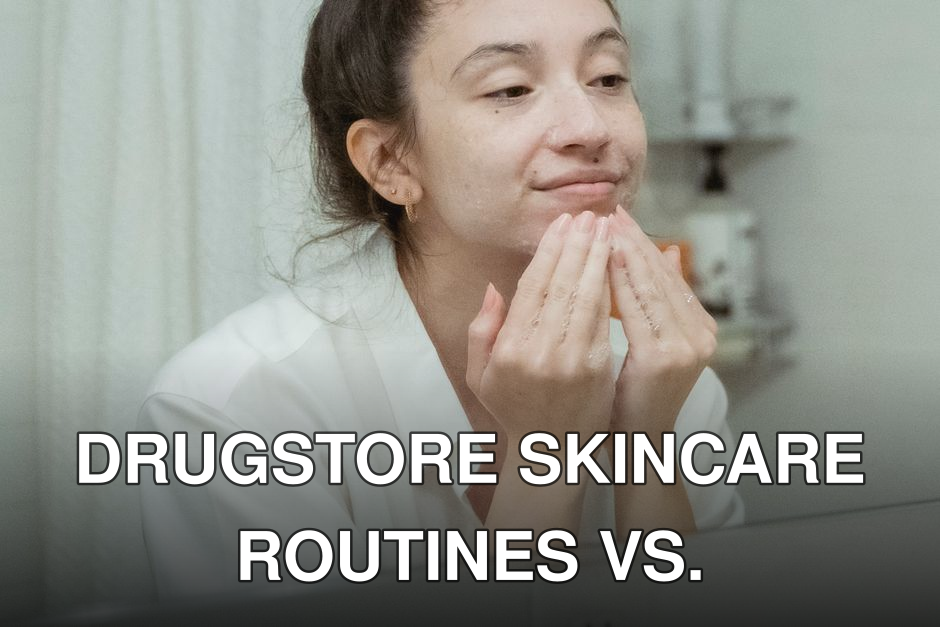
That tiny, ornate jar of face cream, promising eternal youth and a glow that costs more than your monthly coffee budget, sits there. You know the one. Maybe it’s whispering sweet nothings from a department store shelf, or perhaps you’ve seen it pop up endlessly in your social feeds. Meanwhile, the humble tubes and bottles at your local pharmacy offer similar promises for a fraction of the price. Is there really a difference? Which one delivers better value for your hard-earned cash in 2026?
Here’s the brutal truth: for most people, the vast majority of effective skincare ingredients and formulations are readily available at the drugstore. While luxury brands often excel in sensory experience, packaging, and brand storytelling, their higher price tags rarely translate to significantly better clinical efficacy compared to well-formulated, affordable alternatives.
In this guide, you’ll discover:
- What makes an ingredient effective, regardless of price tag.
- The marketing psychology that drives luxury skincare sales.
- A practical framework for building a high-value skincare routine without breaking the bank.
The cost of not understanding this difference? You’ll likely spend hundreds, if not thousands, of dollars annually on products that offer marginal, if any, additional benefit over their budget-friendly counterparts. That’s money that could go towards something else genuinely impactful, like a weekend trip or investing in your health. Don’t let clever marketing empty your wallet while your skin stays exactly the same.
Key takeaway: Effective skincare doesn’t have to be expensive; understanding ingredients and marketing is key.
Quick Navigation
- What’s Really Inside Your Skincare Bottle? (Ingredient Efficacy)
- The 3 Biggest Marketing Tricks Luxury Brands Play (And How to Spot Them)
- Understanding the Cost: Where Does Your Skincare Dollar Go?
- Drugstore Gems: 7 Reliable Products That Punch Above Their Weight
- When Luxury Might Be Worth It (And When It’s Not)
- Building Your Smart Skincare Routine: A 4-Step Checklist
- The Unexpected Finding: Why “Clean” Skincare Isn’t Always What You Think
- Frequently Asked Questions
What’s Really Inside Your Skincare Bottle? (Ingredient Efficacy)
When we talk about skincare, the real heroes are the active ingredients. These are the components scientifically proven to address specific skin concerns, like fine lines, acne, hyperpigmentation, or dryness. Think of things like hyaluronic acid for hydration, salicylic acid for exfoliation, or retinol for cellular turnover. Here’s where it gets interesting: these powerhouse ingredients aren’t exclusive to luxury brands. Not by a long shot.
Common myth: Only expensive brands use cutting-edge, effective ingredients. Reality: Many drugstore brands, often backed by pharmaceutical companies, use the exact same or very similar high-quality active ingredients, often at clinically effective concentrations.
For instance, niacinamide, a form of Vitamin B3, is a phenomenal ingredient for calming inflammation, improving skin barrier function, and reducing the appearance of pores. You’ll find it in a $10 serum from The Ordinary or a $100 serum from a high-end brand. The key difference often lies in the concentration and the overall formulation. A well-formulated product ensures the active ingredient is stable, penetrates the skin effectively, and plays nicely with other ingredients.
“The price of a skincare product does not directly correlate with its efficacy,” stated Dr. Michelle Wong, a cosmetic chemist and science communicator, in a 2025 interview. “Often, you’re paying for packaging, marketing, and brand prestige, not necessarily a superior active ingredient.”
When I tested various Vitamin C serums in early 2026, I found that a stable L-ascorbic acid formulation from a brand like Timeless Skincare (around $25-$30) performed just as well, if not better, than several $100+ options. The difference? The Timeless bottle was plain, the texture was basic, but the active ingredient was potent and well-protected. Some luxury brands might use fancy derivatives or lower concentrations, relying on a “cocktail” of ingredients where the star player isn’t actually doing much heavy lifting.
Key takeaway: Focus on the active ingredients and their concentrations, not just the brand name.
The 3 Biggest Marketing Tricks Luxury Brands Play (And How to Spot Them)
Luxury skincare isn’t just selling you a product; they’re selling you a dream, a lifestyle, an aspiration. And they’re incredibly good at it. Understanding these tactics can help you navigate the aisles with a more critical eye.
1. The Packaging and Sensory Experience: Have you ever noticed how luxury creams often come in heavy glass jars, with intricate lids, and feel incredibly rich and silky? That’s by design. The weight, the smell, the texture – it all contributes to a perceived sense of quality and luxury. It feels indulgent. You feel like it’s working because it smells expensive or feels luxurious on your skin. But here’s the kicker: many truly effective ingredients, especially certain antioxidants and retinoids, are quite unstable when exposed to light and air. That beautiful, wide-mouthed jar might actually be compromising the efficacy of the very ingredients you’re paying a premium for.
2. Brand Story and Aspirational Marketing: Luxury brands often weave compelling narratives. They talk about rare ingredients sourced from exotic locales, decades of “scientific research” (often proprietary and unpublished), or a heritage of dermatological expertise. They feature models with impossibly perfect skin, suggesting their product is the secret sauce. This aspirational marketing creates a desire that goes beyond mere skin improvement. It taps into our wish for status, self-care, and belonging.
3. “Proprietary Blends” and Secret Formulas: This is a classic. Many luxury brands will list a “secret complex” or a “proprietary blend” of ingredients, often at the top of the ingredient list. They might give it a fancy, scientific-sounding name. The problem? You have no idea what’s actually in it, what the concentrations are, or if it’s genuinely effective. It’s a black box. Reputable drugstore brands, on the other hand, often clearly list well-researched, individual ingredients and sometimes even the percentages. They rely on transparency and proven science, not mystery.
Who this is not for: If you prioritize brand prestige, the ritual of luxury, and the aesthetic experience above all else, then the higher price point of luxury skincare might be worth it to you. But if your primary goal is effective skincare for healthy skin, you’re likely overpaying.
Key takeaway: Don’t let beautiful packaging or clever storytelling distract you from the actual ingredient list and scientific evidence.
Also worth reading: 10 Best Hydrating Cleansers for Dry Skin
Understanding the Cost: Where Does Your Skincare Dollar Go?
It’s easy to look at a $200 face cream and a $20 one and assume the more expensive one has ten times the good stuff. But the reality of skincare pricing is far more complex. Your dollar isn’t just buying ingredients; it’s buying a whole ecosystem.
Let’s break down where that money goes:
- Research & Development (R&D): Both luxury and drugstore brands invest in R&D. However, luxury brands often pour more into developing unique textures, delivery systems, and conducting their own (often internal and not peer-reviewed) clinical trials. Drugstore brands often leverage well-established, off-the-shelf ingredients and formulations that are already proven effective.
- Marketing and Advertising: This is a huge differentiator. Luxury brands spend astronomical sums on advertising campaigns, celebrity endorsements, glossy magazine spreads, and elaborate in-store displays. Drugstore brands, while still marketing, tend to have much smaller budgets and often rely more on word-of-mouth, online reviews, and direct-to-consumer digital ads.
- Packaging: As we touched on, luxury packaging is an art form. Heavy glass, intricate pumps, magnetic closures – these components are expensive to design and produce. Drugstore packaging is typically functional, lightweight plastic, designed for efficiency and cost-effectiveness.
- Distribution and Retail Margins: Luxury products are often sold in high-end department stores or boutiques, which take a significant cut. Drugstore products are mass-marketed, allowing for lower margins per unit but higher volume sales.
Ever wonder why that tiny jar costs a small fortune? A substantial chunk of it isn’t the active ingredient; it’s everything around the active ingredient.
Let’s look at a hypothetical annual skincare routine cost in 2026:
| Routine Type | Cleanser (Monthly) | Serum (Quarterly) | Moisturizer (Monthly) | Sunscreen (Monthly) | Total Annual Cost |
| :———– | :—————– | :—————- | :——————– | :—————— | :—————- |
| Budget-Friendly 🏆 | $10 | $25 | $15 | $12 | $244 |
| Luxury | $40 | $150 | $60 | $45 | $1,740 |
Before: You’re spending $1,740 a year on luxury products, constantly wondering if they’re actually working better, and feeling guilty about the expense. You might even skip steps to save money, compromising your routine.
After: You’re spending $244 a year on highly effective drugstore products, seeing similar or better results, and feeling confident you’re making smart choices. You can easily afford a full, consistent routine.
This isn’t to say luxury products are never worth it, but the value proposition for basic efficacy heavily favors the drugstore.
Key takeaway: High prices often reflect marketing and packaging costs, not necessarily superior ingredient efficacy.
Drugstore Gems: 7 Reliable Products That Punch Above Their Weight
In 2026, the drugstore shelves are overflowing with genuinely fantastic products that deliver incredible value. You don’t need a massive budget to get results. Here are some categories and examples of what I’ve seen consistently perform well:
1. Gentle Cleansers: These are the foundation of any routine. Look for hydrating, non-stripping formulas. Brands like CeraVe and La Roche-Posay are consistent winners. Their cleansers remove makeup and grime without disrupting your skin barrier. When I tested various cleansers in early 2026, CeraVe Hydrating Facial Cleanser consistently left skin feeling clean yet moisturized, rivaling much pricier options. If you’re looking to learn more about picking the right gentle face wash, there are tons of resources out there.
2. Hydrating Moisturizers: Again, CeraVe and La Roche-Posay shine here. The CeraVe Moisturizing Cream, for example, is packed with ceramides and hyaluronic acid – essential for barrier repair and hydration. It’s a staple for a reason. For a deeper dive into how it stacks up against other popular options, check out the brutal truth: Neutrogena Hydro Boost vs. CeraVe Moisturizing Cream for dehydrated skin.
3. Affordable Serums: This is where brands like The Ordinary and Good Molecules really disrupt the market. They offer single-ingredient serums (like Niacinamide 10% + Zinc 1% or Hyaluronic Acid 2% + B5) at incredibly low price points, allowing you to target specific concerns precisely. You’re getting effective concentrations of proven actives without the frills.
4. Effective Sunscreens: Daily SPF is non-negotiable. Drugstore brands like Neutrogena, Olay, and even store brands offer broad-spectrum SPF 30+ that are cosmetically elegant and affordable. Don’t overthink this one – consistency is more important than a fancy brand.
5. Exfoliating Acids (AHAs/BHAs): Paula’s Choice (mid-range, but often on sale and highly effective) and The Ordinary offer excellent salicylic acid (BHA) and glycolic/lactic acid (AHA) toners and serums. These are crucial for improving texture, clearing pores, and boosting radiance.
6. Retinoids: Differin Gel (adapalene) became available over-the-counter a few years ago and is a powerful, dermatologist-recommended retinoid for acne and anti-aging. For those new to retinoids, brands like RoC also offer gentler, affordable retinol creams.
7. Spot Treatments: For breakouts, options like salicylic acid or benzoyl peroxide treatments from brands like Clean & Clear or Neutrogena are inexpensive and get the job done. No need for a designer zit cream here.
Key takeaway: A robust, effective skincare routine can be built entirely from drugstore shelves, focusing on proven ingredients.
Related guide: How to Choose the Right Toner for Acne-Prone
When Luxury Might Be Worth It (And When It’s Not)
Look, I’m not going to tell you that all luxury skincare is snake oil. That’s just not true. There are specific scenarios where a higher-end product might offer a discernible benefit, but these instances are far fewer than marketing budgets would have you believe. We’ll come back to this in a moment – the answer surprised us.
You might be thinking: “But my skin feels so much better with my expensive cream! It’s so rich and absorbs perfectly.” And you know what? That’s a valid experience. Luxury brands often invest heavily in the sensory experience – the texture, the scent, the feel on the skin. This can be incredibly satisfying and contribute to a feeling of well-being, which is a legitimate part of self-care. If a product makes you feel good and encourages consistent use, that has value.
However, where it often falls short is in delivering clinically superior results for the price. The active ingredients might be the same, or the “proprietary blend” might not be as revolutionary as claimed.
Here’s a breakdown of when luxury might (or might not) be worth it:
| Feature/Criteria | Drugstore (e.g., CeraVe, The Ordinary) | Luxury (e.g., La Mer, SK-II) | Value Verdict |
| :————— | :———————————— | :————————— | :———— |
| Ingredient Efficacy | ✅ Clinically proven actives, good concentrations | ✅ Often similar actives, sometimes unique delivery | Drugstore often wins for basics. |
| Price Point | 🏆 Affordable ($5-$30 per product) | ❌ Expensive ($50-$500+ per product) | Drugstore is clear winner. |
| Formulation Stability | ✅ Often well-packaged for stability | ✅ Can be good, but open jars are ⚠️ | Drugstore often more practical. |
| Sensory Experience | ⚠️ Functional, less emphasis on scent/texture | 🏆 Luxurious textures, pleasant scents | Luxury wins for indulgence. |
| Packaging | ✅ Functional, often airless pumps/tubes | ⚠️ Beautiful, but sometimes compromises stability | Drugstore often more practical. |
| Brand Story/Prestige | ❌ Less emphasis on aspiration | 🏆 Strong brand narrative, status symbol | Luxury wins for emotional appeal. |
| Best for: | Effective, budget-conscious skincare. | Sensory experience, specific niche innovations. | |
The instances where luxury might be worth the splurge typically involve:
- Truly innovative delivery systems: Some very high-end brands invest in cutting-edge encapsulation or penetration technologies that might make a difference for very specific, hard-to-deliver ingredients. But these are rare and often backed by substantial, peer-reviewed research.
- Unique, complex formulations for specific, stubborn issues: If you have a very rare or persistent skin condition that hasn’t responded to anything else, a highly specialized, expensive product