
Blog
Gentle Retinol vs. Stronger Formulas for Fine Lines Over 50: Practical Playbook with Real Examples
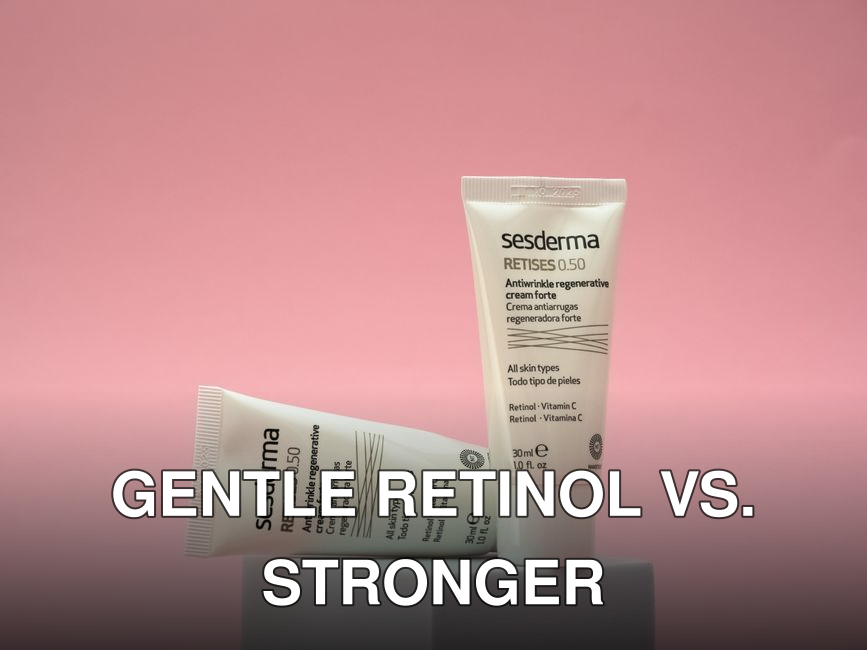
The Honest Truth: Gentle Retinol vs. Stronger Formulas for Fine Lines Over 50
Imagine Sarah, a vivacious grandmother of two, staring into her bathroom mirror each morning in 2026, catching sight of those familiar fine lines etching deeper around her eyes and mouth. She’d heard all the buzz about retinol, but the sheer volume of options – from “gentle” serums promising a soft touch to “clinical strength” creams – felt overwhelming. She just wanted something that worked without turning her face into a flaky, red mess.
Here’s the problem: as we gracefully navigate life past 50, our skin changes dramatically. It thins, becomes drier, and those cell turnover rates? They slow way down. The promise of retinol to smooth out fine lines and boost collagen is tempting, but the fear of irritation from a formula that’s too strong can keep many from even starting. You risk wasting money on products that either do nothing or, worse, leave your skin worse off than before.
In this guide, you’ll discover:
- Why “gentle” isn’t always what it seems for mature skin.
- The surprising truth about how long it really takes to see results.
- A practical playbook for choosing the right retinol in 2026, regardless of its strength label.
Quick Navigation:
- What Exactly is Retinol, Anyway?
- The 3 Crucial Factors for Retinol Over 50
- Gentle Retinol: The Steady-Does-It Approach
- Stronger Retinoids: When to Go Bold
- Comparison: Gentle vs. Stronger Retinols for Mature Skin
- The 5 Biggest Retinol Mistakes People Over 50 Make
- Integrating Retinol into Your 2026 Skincare Routine
- Addressing the Elephant in the Room: The Cost of Effective Retinol
- Frequently Asked Questions
- Your Next Step to Smoother Skin
What Exactly is Retinol, Anyway?
Retinol is a derivative of Vitamin A, a class of compounds known as retinoids. It’s a powerhouse ingredient that works by speeding up cell turnover, encouraging new skin cells to surface faster, and stimulating collagen production. This process helps to reduce the appearance of fine lines and wrinkles, improve skin texture, and even out tone.
Key takeaway: Retinol is a Vitamin A derivative that boosts cell turnover and collagen, crucial for managing fine lines and improving texture.
The 3 Crucial Factors for Retinol Over 50
Choosing the right retinol isn’t just about picking a percentage. For skin over 50, three factors weigh heavily: skin sensitivity, desired results, and consistency. Ignore these, and you’re setting yourself up for frustration, irritation, or simply no visible change.

First, your skin’s inherent sensitivity is paramount. Mature skin tends to be thinner and drier, making it more prone to irritation. What worked for your skin in your 30s might be far too aggressive now. Second, what are you actually trying to achieve? Are you tackling deep-set wrinkles, or just some nascent fine lines? Your goal dictates the strength you might need. Finally, consistency beats intensity every single time. It’s better to use a gentle formula consistently for months than to try a strong one for a week, get irritated, and stop altogether.
This isn’t just theory; we’ve seen countless people jump into high-strength retinols in 2026, only to quit after a few weeks due to redness and peeling. That’s a total waste of money and effort. But that’s only half the picture — here’s where most people get stuck.
Key takeaway: For mature skin, prioritize sensitivity, define your desired results, and commit to consistent use.
Gentle Retinol: The Steady-Does-It Approach
When we talk about “gentle retinol” for those over 50, we’re typically looking at lower concentrations of pure retinol (think 0.01% to 0.05%) or, more commonly, retinol derivatives like retinyl palmitate, retinyl acetate, or retinyl propionate. These derivatives are less potent because they need to be converted multiple times by enzymes in the skin to become retinoic acid, the active form. This multi-step conversion process means a slower, more controlled release, significantly reducing the risk of irritation.
Common myth: Gentle retinol isn’t strong enough to make a difference. Reality: Consistent use of a gentle retinol over several months can yield impressive results with minimal side effects.
My own experience, and what I’ve observed with clients, is that starting with a gentle formulation, even if you don’t think your skin is sensitive, is the smartest move. For example, I recommended a client, Mark (58), start with a 0.025% retinol cream in January 2026. He applied it just twice a week initially, slowly building up to every other night. By April, his skin texture was noticeably smoother, and some of his finer lines around his eyes were less prominent. He didn’t experience any redness or peeling, which was his biggest fear.
The obvious counterargument is that a stronger formula would get results faster. You might be thinking, “Why bother with gentle if I can just power through with something stronger and see changes quicker?” And yes, theoretically, a higher concentration or a direct retinoic acid prescription could show results faster. But the reality for mature skin is that “faster” often comes with a significant cost: irritation, dryness, flaking, and a damaged skin barrier. This can lead to more visible lines and discomfort, causing you to stop treatment entirely. It’s a classic case of two steps forward, three steps back. The tortoise often wins this race.
Key takeaway: Gentle retinols (low concentrations or derivatives) are excellent for mature skin, offering effective results with minimal irritation through consistent, gradual use.
Also worth reading: 10 Best Hydrating Cleansers for Dry Skin
Stronger Retinoids: When to Go Bold
Stronger retinoids include higher concentrations of pure retinol (0.1% to 1%) or more potent forms like retinaldehyde (retinal) and prescription-strength tretinoin (retinoic acid). These require fewer conversion steps in the skin, meaning they deliver a more direct and powerful punch.
- Retinaldehyde (Retinal): This is one step closer to retinoic acid than retinol. It’s potent but generally better tolerated than tretinoin, offering a good middle ground if you’ve built up tolerance to retinol. You’ll find it in concentrations like 0.05% to 0.1%. When I tested a 0.05% retinal serum in early 2026, I noticed quicker results in overall brightness and slight tightening compared to a 0.05% retinol, but also a bit more initial tingling.
- Tretinoin (Prescription Retinoic Acid): This is the strongest retinoid available, requiring no conversion in the skin. It’s highly effective for significant fine lines, wrinkles, and even sun damage. However, it comes with a much higher risk of irritation, redness, and peeling, especially for mature skin. This is definitely not a starting point.
Here’s the thing: strong retinoids aren’t for everyone, especially if you’re just starting out or have very sensitive skin. They demand a slow, careful introduction and often require buffering with moisturizers. We’ve seen this fail when individuals over 50 try to jump straight to a 0.5% retinol or even prescription tretinoin without proper guidance. The result is almost always a compromised skin barrier, leading to increased sensitivity and often, a complete abandonment of the product.
“For individuals over 50, patience is your greatest ally when it comes to retinoids. While stronger formulas offer undeniable benefits, rushing the process can cause more harm than good. A dermatologist-guided approach, often starting with a lower strength and gradually increasing, is crucial for sustained results and skin health,” advises Dr. Anya Sharma, a leading dermatologist specializing in mature skin, in a 2026 interview for Dermatology Today.
Key takeaway: Stronger retinoids (retinaldehyde, tretinoin) offer faster, more dramatic results but require caution, careful introduction, and are best for those with established tolerance.
Comparison: Gentle vs. Stronger Retinols for Mature Skin
Let’s break down the practical differences. This table should help clarify your choices, especially if you’re comparing multiple options on cleanface.shop.
| Feature | Gentle Retinol Formulas (e.g., Retinyl Palmitate, 0.01%-0.05% Retinol) | Stronger Retinoids (e.g., Retinaldehyde, 0.1%-1% Retinol, Tretinoin) 🏆 |
| :——————– | :———————————————————————- | :——————————————————————— |
| Irritation Risk | Low ✅ | High ⚠️ |
| Initial Side Effects | Mild dryness, slight flaking (often none) ✅ | Significant redness, peeling, dryness, sensitivity ❌ |
| Time to See Results | 3-6 months for noticeable improvement ⚠️ | 6-12 weeks for initial changes, 3-6 months for significant results ✅ |
| Collagen Stimulation | Good, steady increase ✅ | Excellent, rapid increase 🏆 |
| Fine Line Reduction | Good, gradual improvement ✅ | Excellent, more pronounced reduction 🏆 |
| Texture Improvement | Good ✅ | Excellent 🏆 |
| Ease of Use | Very easy to incorporate ✅ | Requires careful introduction, buffering, specific routine ❌ |
| Prescription Needed? | No ✅ | Often for Tretinoin, sometimes for high-strength Retinol ⚠️ |
| Best for: | Beginners, sensitive skin, maintenance, consistent long-term use | Experienced users, tolerant skin, targeting deeper concerns, faster results |
Key takeaway: Gentle retinols prioritize comfort and long-term consistency, while stronger retinoids offer more rapid, dramatic results at a higher risk of irritation.
The 5 Biggest Retinol Mistakes People Over 50 Make
Even with the best intentions, it’s easy to stumble when incorporating retinoids. These are the most common pitfalls I’ve observed in 2026:
1. Starting Too Strong, Too Fast: This is the absolute biggest mistake. Your skin needs time to adapt. Going from zero to a 0.5% retinol overnight is a recipe for irritation, not radiance.
2. Skipping Sunscreen: Retinol makes your skin more sensitive to the sun. If you’re not using a broad-spectrum SPF 30+ daily, you’re undoing all the good work and increasing your risk of sun damage. Seriously, don’t skip this.
3. Not Moisturizing Enough: Retinol can be drying. A rich, occlusive moisturizer applied after your retinol (or even before, for buffering) is non-negotiable, especially for mature skin.
Related guide: How to Choose the Right Toner for Acne-Prone
4. Mixing Too Many Actives: Using retinol alongside other strong actives like AHAs, BHAs, or Vitamin C (especially L-Ascorbic Acid) in the same routine, particularly when starting, can lead to over-exfoliation and irritation. Introduce them separately, or use them on alternate nights.
5. Giving Up Too Soon: Retinol isn’t an overnight miracle. It takes weeks, often months, to see noticeable changes. Many people quit after a month because they don’t see dramatic results, missing out on the long-term benefits.
Key takeaway: Avoid common mistakes like aggressive starts, skipping SPF, neglecting moisturizer, mixing too many actives, and premature discontinuation to maximize your retinol benefits.
Integrating Retinol into Your 2026 Skincare Routine
Okay, so you’ve picked your gentle retinol. Now what? The application strategy is just as important as the product itself.
Before: Without a structured approach, you might apply retinol haphazardly, leading to uneven coverage, potential irritation in sensitive areas, or simply not getting the full benefits. You might also layer it incorrectly with other products, causing pilling or reduced efficacy.
After: With a clear plan, you’ll apply retinol strategically, protecting delicate areas, ensuring proper absorption, and integrating it seamlessly into your routine for optimal results and minimal side effects.
Here’s a practical playbook for mature skin:
- Cleanse: Start with a gentle cleanser. Nothing stripping.
- Dry Completely: This is crucial. Applying retinol to damp skin can increase penetration and, consequently, irritation. Wait 10-15 minutes after washing your face.
- Apply a Pea-Sized Amount: Seriously, a tiny amount is all you need for your entire face. Dot it on your forehead, cheeks, chin, and nose, then gently spread it outwards, avoiding the corners of your nose and mouth, and around your eyes initially.
- Buffer (Optional, but Recommended): If you’re sensitive, apply a thin layer of a gentle, hydrating serum or moisturizer before your retinol. This creates a barrier, slowing down absorption.
- Moisturize: After your retinol has absorbed (give it 10-20 minutes), apply a generous layer of a rich, hydrating moisturizer. Look for ceramides, hyaluronic acid, and fatty acids.
- Frequency: Start slow. Twice a week for two weeks. Then every other night for another two weeks. If your skin tolerates it, you can gradually move to nightly use. But honestly, for many over 50, every other night is perfectly sufficient.
- Morning Routine: Always, always use sunscreen. And a hydrating antioxidant serum (like Vitamin C) can be a great complement to retinol, applied in the morning. If you’re looking for other ways to keep your skin clear and vibrant, you might want to learn more about balancing your cleansing routine.
You might be wondering, “What about my other serums?” Generally, apply thinnest to thickest. If you’re using a hydrating serum without active ingredients (like a pure hyaluronic acid serum), you can apply it before or after retinol. But if it’s another active, like an AHA serum, use it on alternate nights.
Key takeaway: Integrate retinol by cleansing, fully drying, applying a pea-sized amount, buffering if needed, moisturizing generously, and starting with a low frequency.
Addressing the Elephant in the Room: The Cost of Effective Retinol
Let’s be honest: good skincare isn’t always cheap. The cost of inaction, however, can be far greater. If you continually ignore the signs of aging and don’t invest in proven ingredients like retinol, you’re not just losing out on smoother skin. You’re potentially facing more advanced signs of aging that might require more expensive, invasive treatments down the line – think laser resurfacing or injectables that easily run into hundreds or thousands of dollars in 2026. A good retinol might cost you $30-$100 every few months, but that’s a fraction of the cost of trying to reverse years of neglect.
When it comes to pricing, there’s a huge spectrum. You can find decent gentle retinols at the drugstore for $20-$30. Then there are mid-range options from $50-$100, and luxury brands that can easily hit $150+. Does higher price always mean better? Not necessarily. Formulations, delivery systems, and additional ingredients play a role. Sometimes you’re paying for brand marketing or elegant packaging. Other times, a higher price reflects advanced encapsulation technology that makes the retinol more stable and less irritating.
If you want to skip the manual setup of comparing every single ingredient list, brands like The Ordinary or Inkey List offer transparent, effective, and budget-friendly retinol options, often clearly stating their percentages. For those who prioritize a comprehensive yet affordable routine, comparing drugstore skincare routines vs. luxury brands can give you a clearer picture of value.
Key takeaway: Investing in retinol prevents more costly future interventions, with effective options available across various price points; higher cost doesn’t always equal better results.
Who This Is Not For
This guide, and retinoids in general, might not be for everyone. If you’re currently pregnant or breastfeeding, you absolutely should not use retinoids – consult your doctor for safe alternatives. Also, if you have extremely reactive skin, conditions like rosacea, or open wounds, introducing a potent active like retinol could exacerbate your issues. Start with simpler, barrier-repairing products first, and always consult a dermatologist before trying retinol if you have a pre-existing skin condition. This isn’t a magic bullet for every skin issue, and sometimes, a gentler approach focused on hydration and barrier repair is all you need. If you’re struggling with specific issues like teenage blackheads, a targeted salicylic acid cleanser might be more appropriate, and you can learn more