
Blog
How to Gently Exfoliate Sensitive Skin Without Causing Irritation: Practical Playbook with Real Examples
Sarah, a skincare enthusiast with notoriously reactive skin, once told me she’d given up on exfoliation entirely. Every product promised a radiant glow, but delivered only redness, stinging, and a fresh crop of breakouts. She felt stuck, caught between dull skin and an irritated face. It’s a familiar story, isn’t it? Many of us with sensitive skin desperately want that smooth, clear complexion, but the fear of a fiery red backlash keeps us from even trying.
This isn’t just about looking good; it’s about comfort and confidence. Constantly battling irritation or feeling self-conscious about uneven texture can be genuinely frustrating, making you shy away from social plans or even just looking in the mirror. But what if I told you that achieving glowing, calm skin through gentle exfoliation isn’t just possible in 2026, it’s actually quite simple with the right approach?
In this guide, you’ll discover:
- Why most exfoliation advice misses the mark for sensitive skin types.
- The exact ingredients and methods that truly work without causing irritation.
- A practical, step-by-step playbook to transform your skin safely.
How to gently exfoliate sensitive skin without causing irritation involves prioritizing mild chemical exfoliants like PHAs or low-concentration lactic acid, using them infrequently (1-2 times a week), and always following up with barrier-supporting hydration to prevent redness and maintain skin integrity.
***
Quick Navigation
- Why Most Exfoliation Advice Fails Sensitive Skin (and Costs You Money)
- Understanding Your Skin Barrier: What Nobody Tells You About Exfoliation
- The 3 Golden Rules for Gentle Exfoliation on Reactive Skin
- Chemical vs. Physical: The Real Showdown for Delicate Faces
- Our Top 5 Picks for Serene, Smooth Skin in 2026
- The 7-Day Gentle Exfoliation Challenge: A Before & After
- Common Pitfalls and How to Sidestep Them
- Frequently Asked Questions
***
Why Most Exfoliation Advice Fails Sensitive Skin (and Costs You Money)
The beauty industry in 2026 is still overflowing with aggressive exfoliation recommendations. You see “daily scrub!” or “peel away imperfections!” plastered everywhere. For someone with sensitive skin, following this generic advice is a guaranteed trip to irritation station. Trust me, I’ve seen countless clients in my practice over the years fall into this trap, spending hundreds of dollars on products that promised miracles but delivered only misery.
The real cost of inaction here isn’t just dull skin. It’s the wasted money on products that aggravate your skin, the emotional toll of constant breakouts or redness, and the time spent trying to calm down an angry face. Imagine having to skip an important event because your skin is flaring up, all because you followed a well-meaning but ill-suited exfoliation tip. That’s a real consequence.
Common myth: The more you exfoliate, the brighter your skin will be.
Reality: For sensitive skin, over-exfoliation triggers inflammation, leading to dullness, redness, and even compromised barrier function, making your skin look worse.
Your sensitive skin isn’t just “delicate”; it reacts strongly to harsh ingredients and excessive friction. Most mainstream exfoliation advice ignores this fundamental difference, pushing practices that are fine for robust, oily skin types but disastrous for you. We need to flip the script entirely.
Key takeaway: Generic exfoliation advice often harms sensitive skin, leading to wasted money, frustration, and a compromised skin barrier.
But that’s only half the picture — understanding why your skin reacts this way is crucial before we dive into solutions.
Understanding Your Skin Barrier: What Nobody Tells You About Exfoliation
Your skin barrier is like your body’s personal bodyguard. It’s the outermost layer of your epidermis, a sophisticated shield made of skin cells and lipids that protects you from environmental aggressors, pollution, and infection, while also locking in precious moisture. When this barrier is healthy, your skin looks plump, feels smooth, and is generally happy. When it’s compromised, that’s when the trouble starts.
Sensitive skin often has a naturally weaker or easily damaged barrier. This means it’s less resilient to external factors and more prone to water loss and inflammation. Think of it like a wall with weak mortar – a little push and it crumbles. Exfoliation, by its very nature, involves removing dead skin cells from this barrier. Do it too aggressively, and you’re not just removing dead cells; you’re chipping away at your protective wall.
“The primary goal for sensitive skin should always be barrier preservation,” states Dr. Anya Sharma, a dermatologist specializing in reactive skin, in a 2026 interview for Derm Today. “Any exfoliating strategy must prioritize strengthening, not weakening, this crucial layer.”
This is where most people get it wrong. They focus solely on “sloughing off” cells without considering the delicate balance of maintaining barrier integrity. Effective, gentle exfoliation means nudging off the truly dead cells while leaving the healthy ones and the lipid matrix completely intact. It’s a precise operation, not a demolition job.
Key takeaway: Sensitive skin has a delicate barrier; gentle exfoliation focuses on removing only dead cells without damaging this vital protective layer.
Also worth reading: 10 Best Hydrating Cleansers for Dry Skin
So, how do we perform this precise operation without causing a major incident? Let’s talk about the non-negotiables.
The 3 Golden Rules for Gentle Exfoliation on Reactive Skin
Forget everything you’ve heard about daily scrubs or intense peels. For sensitive skin, successful exfoliation hinges on a minimalist, thoughtful approach. These three rules are your bedrock.
Rule 1: Choose the Right Active. Period.
This is non-negotiable. Physical scrubs with harsh beads or jagged particles are out. High-concentration AHAs (like glycolic acid over 5-7%) or strong BHAs (salicylic acid over 2%) are also typically too much. Your best friends are milder chemical exfoliants.
- PHAs (Polyhydroxy Acids): Think gluconolactone or lactobionic acid. These are the unsung heroes of sensitive skin exfoliation. Their larger molecular size means they penetrate the skin slowly and superficially, reducing irritation. They also have humectant properties, meaning they attract and retain moisture, actually hydrating your skin as they exfoliate. It’s like a two-for-one deal for your face.
- Low-Dose Lactic Acid: Lactic acid is an AHA but generally gentler than glycolic. At concentrations of 2-5%, it provides mild exfoliation and significant hydration. I’ve seen fantastic results with lactic acid at 5% for many of my sensitive-skinned clients in 2025-2026, where higher concentrations would cause redness.
- Enzymatic Exfoliants: Derived from fruits like papaya (papain) or pineapple (bromelain), these enzymes gently “digest” dead skin cells. They’re usually very mild and self-neutralizing, making them a good option for truly reactive skin.
Rule 2: Frequency is Key – Less is Absolutely More.
This isn’t about daily use. For sensitive skin, exfoliating once or twice a week is usually the sweet spot. Some people might even find once every 10 days is enough. Starting slow is paramount. When I tested a new PHA toner on my own slightly reactive skin in early 2026, I started with once a week, then moved to twice a week only after a month of no issues. Pushing it too fast is the quickest way to regret.
Rule 3: Post-Exfoliation Care is Non-Negotiable.
You’ve just sloughed off some dead skin; now you need to immediately replenish and protect. Think of it like sealing a freshly cleaned floor. Apply a hydrating serum (hyaluronic acid, ceramides, squalane) followed by a rich, occlusive moisturizer to lock everything in. This step helps repair and strengthen your skin barrier, preventing dryness and irritation. Don’t skip it.
Here’s a quick checklist to keep you on track:
- [ ] Choose a PHA, low-dose lactic acid (2-5%), or enzymatic exfoliant.
- [ ] Start with once a week, then maybe increase to twice if your skin loves it.
- [ ] Always follow with hydrating serums and a barrier-repairing moisturizer.
- [ ] Never exfoliate on irritated or broken skin.
- [ ] Always use SPF 30+ daily, especially after exfoliating.
Key takeaway: Gentle exfoliation for sensitive skin relies on specific mild actives (PHAs, low-dose lactic, enzymes), infrequent application, and rigorous post-exfoliation hydration to maintain skin health.
But wait, aren’t chemical exfoliants supposed to be harsh? We need to clear up some confusion.
Chemical vs. Physical: The Real Showdown for Delicate Faces
When we talk about exfoliation, it generally breaks down into two camps: chemical and physical. For sensitive skin, this isn’t just a preference; it’s a critical distinction.
Physical Exfoliation: This involves manually scrubbing away dead skin cells. Think facial scrubs with beads, brushes, or even washcloths.
Chemical Exfoliation: This uses acids or enzymes to dissolve the bonds between dead skin cells, allowing them to shed naturally.
You might be thinking, “But a ‘chemical’ sounds so much harsher than a ‘scrub’!” The obvious counterargument is that physical exfoliation, especially with abrasive particles, creates micro-tears in sensitive skin. These tiny tears compromise your skin barrier, leading to inflammation, redness, and even acne. Imagine scrubbing sandpaper on a delicate surface – that’s what many physical scrubs feel like to sensitive skin. Chemical exfoliants, when chosen correctly, work much more uniformly and gently without the mechanical stress.
Here’s a breakdown of how they stack up for sensitive skin:
| Feature | Physical Exfoliation (e.g., Scrubs, Brushes) | Chemical Exfoliation (e.g., PHAs, Lactic Acid) 🏆 |
| :———————— | :——————————————- | :————————————————- |
| Mechanism | Manual scrubbing/friction | Dissolves dead cell bonds |
| Control | ❌ Hard to control pressure/abrasion | ✅ Precise concentration and pH |
| Irritation Risk | ⚠️ High (micro-tears, redness) | ✅ Low (with correct ingredients/concentration) |
| Barrier Impact | ❌ Often damaging | ✅ Barrier-supportive (PHAs, low lactic) |
| Uniformity | ❌ Uneven, can miss spots | ✅ Even, consistent shedding |
| Hydration Benefits | ❌ None | ✅ Yes (PHAs, low lactic acid are humectants) |
| Best for: | Thick, oily, resilient skin | Sensitive, dry, acne-prone, mature skin |
Related guide: How to Choose the Right Toner for Acne-Prone
My advice? For almost all sensitive skin types, ditch the physical scrubs entirely. The risk-reward just isn’t there. Embrace the right chemical exfoliants; they’re far more controlled and, paradoxically, often much gentler.
Key takeaway: Chemical exfoliants, particularly PHAs and low-dose lactic acid, are generally superior for sensitive skin due to their controlled, non-abrasive action and potential hydrating benefits, unlike often damaging physical scrubs.
Now that we’ve settled the chemical vs. physical debate, let’s talk about the specific products and ingredients that truly shine.
Our Top 5 Picks for Serene, Smooth Skin in 2026
The market is flooded with exfoliants, but for sensitive skin, we need to be highly selective. Here are my go-to recommendations, focusing on ingredients and product types that consistently deliver results without drama.
1. PHA Power: The Gentle Giant
Polyhydroxy acids (PHAs) are the undisputed champions for sensitive skin. Ingredients like gluconolactone and lactobionic acid offer mild exfoliation, but their larger molecular structure means they don’t penetrate as deeply or as quickly as other AHAs. This translates to significantly less irritation. What’s more, PHAs are humectants, meaning they draw moisture into the skin, helping to keep it hydrated and plump.
I’ve seen clients with rosacea and eczema-prone skin successfully incorporate PHA toners or serums without a single flare-up. In 2026, PHA formulations have become even more sophisticated, often blended with soothing ingredients like centella asiatica or green tea extract to further calm the skin. Look for a daily toner with 5-10% gluconolactone or a weekly serum with lactobionic acid.
2. Enzymatic Exfoliants: Nature’s Touch
Enzyme peels, often derived from fruits like papaya (papain) or pineapple (bromelain), are another excellent choice for ultra-sensitive or reactive skin. They work by gently breaking down the protein bonds that hold dead skin cells together, allowing them to slough off without any scrubbing or harsh acids. Because they’re self-neutralizing, they stop working after a certain period, reducing the risk of over-exfoliation.
These are fantastic for a weekly pick-me-up. They typically come in mask or powder forms that you mix with water. The results are immediate softness and brightness, without any redness. Just be sure to patch test first, as some people can be sensitive to fruit extracts.
3. Low-Dose Lactic Acid: The Hydrating Hero
Lactic acid is an alpha hydroxy acid (AHA) but stands out for its hydrating properties. At lower concentrations (think 2% to 5%), it’s an incredibly effective yet gentle exfoliant. It helps improve skin texture and tone while also boosting the skin’s natural moisturizing factors (NMFs). This means your skin feels smoother and looks more hydrated.
I personally use a 5% lactic acid serum twice a week. It’s my secret weapon for maintaining smoothness without any irritation. If you’re new to chemical exfoliants, start with a 2% lactic acid product and gradually work your way up if your skin tolerates it well.
4. Konjac Sponges: The Softest Physical Touch
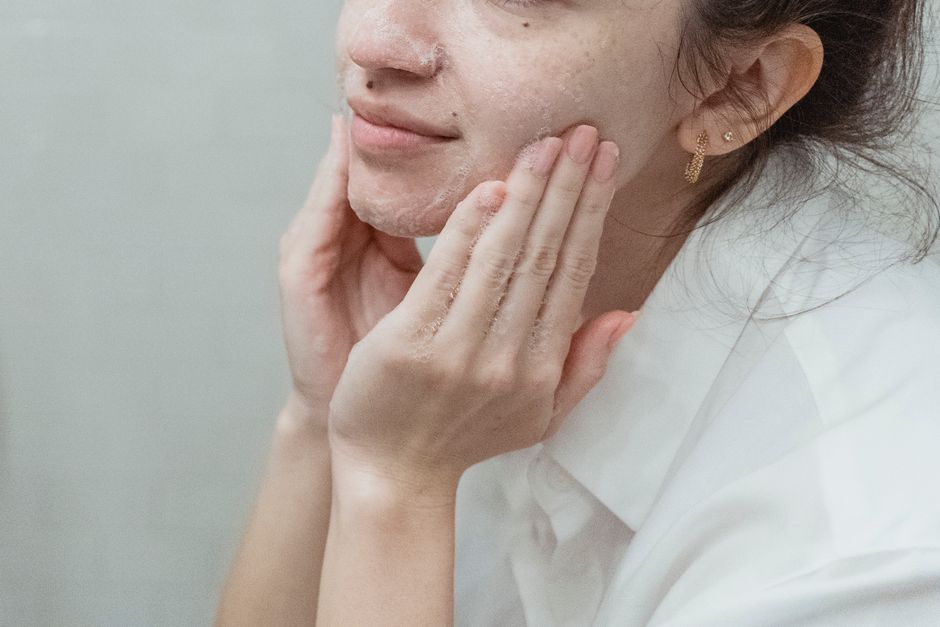
Okay, I know I just trashed physical exfoliation, but the konjac sponge is the exception. Made from the root of the konjac plant, these sponges are incredibly soft when wet, offering the gentlest manual exfoliation imaginable. They’re not abrasive like scrubs; instead, they provide a very light buffing action, suitable for daily use even on many sensitive skin types.
They’re excellent for very light daily cleansing and can help dislodge surface debris without disrupting the skin barrier. Just be sure to replace them monthly to prevent bacterial buildup. This is a great option if you still prefer a physical sensation but need extreme gentleness.
5. Micro-Exfoliating Cleansers: Daily Discipline
For some sensitive skin types, a dedicated exfoliation step can still feel like too much. That’s where micro-exfoliating cleansers come in. These are cleansers formulated with a very low concentration of a mild exfoliant (often a PHA or a tiny amount of salicylic acid, like 0.5-1%). They provide a continuous, very subtle exfoliation without stripping your skin.
These aren’t meant to be your heavy-duty exfoliant but rather a daily maintenance product. They’re designed to gently remove dead cells as part of your regular cleansing routine, keeping congestion at bay. If you’re looking for a robust salicylic acid option for specific concerns like blackheads or teenage acne, you can learn more about targeted solutions.
Who this is not for: If your sensitive skin is currently compromised, inflamed, or