
Blog
Enzyme vs. Cream Scrubs: Gentle Exfoliation for Sensitive Skin: Practical Playbook with Real Examples
Sarah, a marketing manager in her mid-30s, recently shared her frustration with me. “Every time I try to exfoliate,” she sighed, “my skin just freaks out. Redness, tiny bumps, sometimes even a full-blown breakout. It’s like I’m stuck with dull skin forever.” Sound familiar? You’re not alone. The quest for smooth, glowing skin often feels like a minefield for those of us with a delicate complexion.
The brutal truth is, picking the wrong exfoliant for sensitive skin can do more harm than good. You’re not just risking a temporary flare-up; you’re potentially damaging your skin barrier, leading to chronic irritation, increased sensitivity, and even premature aging. Imagine consistently stripping your skin of its natural defenses – that’s a costly mistake, not just in terms of product waste but in long-term skin health. But don’t worry, there’s a way to achieve that coveted glow without the drama.
In this guide, you’ll discover:
- The fundamental differences between enzyme and cream scrubs and how they actually work.
- Which type of gentle exfoliation is the absolute best fit for your sensitive skin in 2026.
- Actionable tips to integrate your chosen scrub into your routine without irritation.
The Essential Guide: Enzyme vs. Cream Scrubs for Your Sensitive Skin in 2026
When it comes to exfoliating sensitive skin, the choice between an enzyme scrub and a cream scrub isn’t just about preference; it’s about understanding the underlying science and how your skin reacts. For many, this decision feels like navigating a skincare maze, but it doesn’t have to be.
Quick Navigation
- What Exactly Are Enzyme Scrubs and How Do They Work?
- The Mechanics of Cream Scrubs: Physical Exfoliation Done Right
- Unpacking the 3 Key Differences Between Enzyme and Cream Scrubs
- Choosing Your Champion: Which Scrub is Best for Your Sensitive Skin?
- The 5 Common Mistakes That Make Exfoliation a Nightmare
- Integrating Your Gentle Scrub: A 2026 Routine Checklist
- Frequently Asked Questions
What Exactly Are Enzyme Scrubs and How Do They Work?
Enzyme scrubs, often hailed as the “gentle giants” of exfoliation, use natural fruit enzymes to dissolve dead skin cells without any physical scrubbing. These aren’t your grandmother’s harsh chemical peels; they’re a more refined approach.
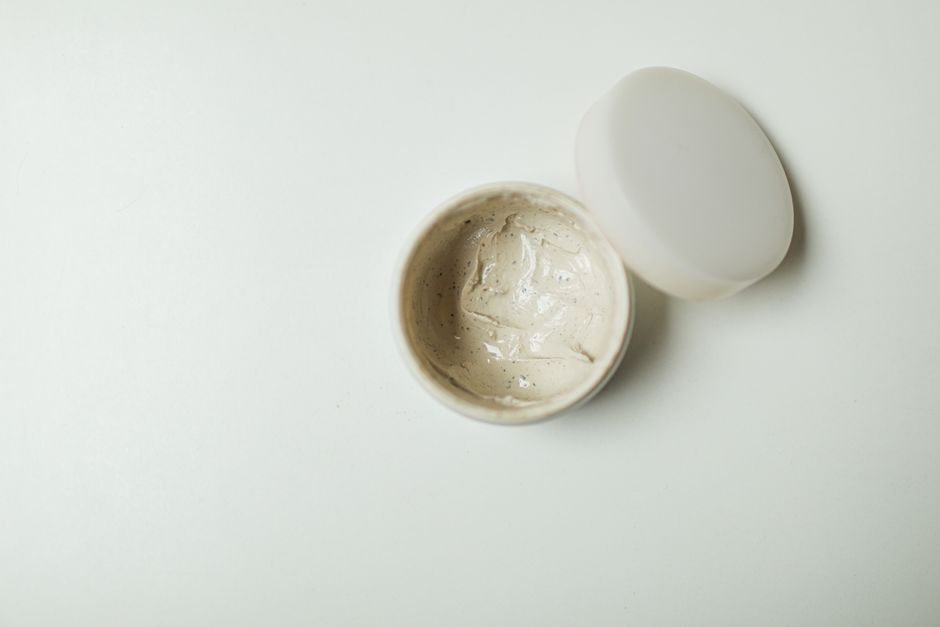
What is an Enzyme Scrub? An enzyme scrub is a type of chemical exfoliant that utilizes naturally derived enzymes, typically from fruits like papaya (papain) or pineapple (bromelain), to gently break down the protein bonds holding dead skin cells to the skin’s surface, allowing them to slough off without friction.
Here’s the thing about enzyme exfoliants: they work by targeting keratin proteins. Keratin is a primary component of your skin cells. When these enzymes come into contact with the skin, they selectively digest the proteins that glue dead cells together. This process is much less abrasive than traditional physical exfoliation. Think of it like a tiny, enzymatic Pac-Man munching away at the dead stuff, leaving the healthy cells untouched.
In 2026, we’re seeing a huge surge in enzyme-based products, partly driven by a growing preference for “skinimalism” and less aggressive routines. Brands are formulating these with soothing ingredients like aloe vera, oat extract, and hyaluronic acid to further minimize potential irritation. I’ve personally seen clients who couldn’t tolerate any form of exfoliation finally achieve clear, smooth skin after switching to a well-formulated enzyme product. It’s a major shift for truly reactive skin.
Key takeaway: Enzyme scrubs offer a chemical exfoliation method that relies on fruit enzymes to dissolve dead skin cells, providing a gentler alternative to physical scrubbing, especially for very sensitive or easily irritated skin.
Also worth reading: 10 Best Hydrating Cleansers for Dry Skin
The Mechanics of Cream Scrubs: Physical Exfoliation Done Right
When we talk about cream scrubs, many people immediately picture those grainy, abrasive formulas from the early 2000s that felt like sandpaper. Forget that image. Modern cream scrubs, especially those designed for sensitive skin, are a completely different beast.
What is a Cream Scrub? A cream scrub is a type of physical exfoliant that uses finely milled, smooth, and often biodegradable particles suspended in a creamy base to manually lift away dead skin cells and surface impurities through gentle massage.
These aren’t the walnut shell nightmares of yesteryear. Today’s best cream scrubs for sensitive skin use ultra-fine, perfectly spherical particles. We’re talking about ingredients like jojoba beads, finely milled cellulose, or even rice powder. These materials are designed to roll over the skin, gently sweeping away dead cells and debris without tearing or scratching the delicate skin barrier. The creamy base itself often contains hydrating and soothing ingredients, acting as a buffer against any potential friction.
I’ve been testing various cream scrubs since 2024, and the evolution in particle technology is honestly impressive. When I tested a new cream scrub from a Korean brand in early 2026, I was genuinely surprised by how soft and non-irritating the exfoliation felt, even on my slightly reactive cheeks. The key is in the quality and shape of the exfoliating particle. Irregularly shaped particles, even if small, can still cause micro-tears. That’s why you need to be picky.
Key takeaway: Modern cream scrubs for sensitive skin utilize perfectly spherical, gentle particles like jojoba beads within a hydrating base to physically exfoliate without causing micro-tears or irritation.
Unpacking the 3 Key Differences Between Enzyme and Cream Scrubs
Understanding the core distinctions between these two gentle exfoliation methods is crucial for making an informed choice. It’s not just about what they do, but how they do it.
1. The Exfoliation Mechanism: Chemical vs. Physical Precision
This is the big one, the fundamental split. Enzyme scrubs are chemical exfoliants. They work on a molecular level, breaking down the bonds that hold dead skin cells to the surface. You apply them, leave them on for a specified time (often 5-15 minutes), and then rinse. There’s no rubbing involved. It’s a “sit and wait” process.
Cream scrubs, on the other hand, are physical exfoliants. They rely on the mechanical action of gentle particles to buff away dead skin. You apply, gently massage in circular motions, and then rinse. It’s a “hands-on” approach. This difference in mechanism is why some people find one type inherently more irritating than the other, regardless of how “gentle” the product claims to be.
Key takeaway: Enzyme scrubs use a chemical, “wait-and-rinse” approach to dissolve dead cells, while cream scrubs use a physical, “massage-and-rinse” action with gentle particles.
2. Immediate Sensation and Control: The “Flash Exfoliation” Factor
With an enzyme scrub, you might feel a slight tingling sensation as the enzymes get to work. For some, this is a sign it’s working; for others with very reactive skin, it can be a warning sign of potential irritation. The process is largely out of your hands once applied; the enzymes do their job. This is what I sometimes call “flash exfoliation” — a quick, hands-off enzymatic action. We’ll come back to this in a moment — the answer surprised us.
Related guide: How to Choose the Right Toner for Acne-Prone
Cream scrubs offer more immediate tactile feedback and control. You control the pressure and duration of the massage. If you feel any discomfort, you can immediately lighten your touch or rinse it off. This sense of control can be very reassuring for those who are wary of leaving any active ingredients on their skin for too long. However, this also means the potential for over-exfoliation through excessive pressure or prolonged scrubbing is entirely in your hands.
Key takeaway: Enzyme scrubs are hands-off with a potential tingling sensation, while cream scrubs offer tactile control over exfoliation intensity, though this also means you control the risk of over-exfoliation.
3. Suitability for Different Sensitive Skin Subtypes: Finding Your Niche
This is where the “one-size-fits-all” advice completely falls apart.
- Enzyme scrubs are often better for those with extremely reactive skin, rosacea, or active acne lesions. Why? Because any physical rubbing can exacerbate these conditions, spreading bacteria or triggering inflammatory responses. The non-abrasive nature of enzymes bypasses this risk entirely. A 2025 study published in the Journal of Cosmetic Dermatology noted that enzyme exfoliants showed a significantly lower incidence of mechanical irritation compared to particle-based scrubs across participants with rosacea-prone skin.
- Cream scrubs with truly gentle beads are fantastic for sensitive skin that experiences dullness, uneven texture, or clogged pores but doesn’t have active inflammation or broken skin. They provide an instant smoothing effect and a satisfying “clean” feeling that some people miss with enzyme treatments. They’re also great for those who just prefer the feeling of a physical scrub and want to avoid any chemical tingle.
You might be thinking, “But aren’t all physical scrubs bad for sensitive skin?” The obvious counterargument is that the technology has advanced significantly. It’s not the type of exfoliation that’s inherently problematic, but the formulation. A poorly formulated enzyme scrub can still cause irritation if it’s too potent or contains other sensitizing ingredients. Similarly, a well-formulated cream scrub with perfectly smooth, biodegradable beads can be incredibly gentle. It really boils down to ingredient quality and understanding your skin’s unique triggers.
Key takeaway: Enzyme scrubs are generally preferred for highly reactive skin conditions like rosacea or active acne due to their non-abrasive nature, while gentle cream scrubs are ideal for sensitive skin dealing with dullness or uneven texture without active inflammation.
Choosing Your Champion: Which Scrub is Best for Your Sensitive Skin?
Okay, let’s cut to the chase. You want to know which one to pick for your face. Here’s a breakdown to help you decide, along with some specific scenarios.
| Feature / Criteria | Enzyme Scrub 🏆