
Blog
How to Effectively Use a Gentle Daily Face Wash on Sensitive Skin: Practical Playbook with Real Examples

Maria, a brilliant graphic designer, spent years convinced her sensitive skin was just “bad luck.” She’d buy every “gentle” face wash on the market, only to wake up with redness, tightness, or even a fresh breakout. The products weren’t the problem; her method was.
Sound familiar? Many of us struggle to truly cleanse sensitive skin without stripping it bare, leaving us in a frustrating cycle of irritation, product hopping, and wasted money. This isn’t just about finding the right bottle; it’s about mastering a technique that respects your skin’s delicate barrier. Ignoring this small detail can lead to chronic inflammation, accelerated aging, and a constant feeling of discomfort. It’s a silent tax on your skin health.
In this guide, you’ll discover:
- Why your current “gentle” routine might be doing more harm than good.
- The exact steps to transform your daily wash into a soothing, effective ritual.
- A deeper look at ingredients and water quality that impact your skin more than you think.
The Brutal Truth: How to Master Gentle Daily Face Washing for Sensitive Skin
Effectively washing sensitive skin with a gentle daily face wash involves meticulous technique, precise temperature control, and a nuanced understanding of ingredient interactions, not just blindly picking a “gentle” label. The true goal is to cleanse without stripping, thereby preserving the skin’s vital barrier function.
Quick Navigation
- Why Your “Gentle” Face Wash Might Still Be Irritating You (And What to Do About It)
- The 3 Golden Rules for a Flawless Sensitive Skin Cleansing Routine
- What Nobody Tells You About Your Water Quality
- Decoding the Labels: 7 Ingredients to Seek and 3 to Avoid in 2026
- The Surprising Role of Pre-Cleansing and Double Cleansing for Reactive Skin
- Beyond the Wash: Essential Post-Cleansing Steps for a Happy Face
- Who This Is Not For
- When to Ditch Your Daily Wash and Call a Pro
- Frequently Asked Questions
Why Your “Gentle” Face Wash Might Still Be Irritating You (And What to Do About It)
You’ve done your homework. You picked a pH-balanced, fragrance-free, dermatologist-tested face wash. So why does your skin still feel tight, look red, or break out after cleansing? The product itself might be fine, but your application method is likely sabotaging its gentleness. Most people assume “gentle” means they can go wild with scrubbing or use scalding hot water. Big mistake.
Here’s the thing: sensitive skin is a bit like a shy houseplant. It needs consistent, careful attention, not a deluge. When you use water that’s too hot, you strip away natural oils and disrupt the skin’s lipid barrier. Scrubbing aggressively, even with a soft cloth, creates micro-tears and inflammation. Using too much product, or not rinsing thoroughly enough, leaves residues that can clog pores or irritate. These seemingly minor missteps accumulate, leading to a chronically reactive complexion. You might be thinking, “It’s just soap and water! How complicated can it be?” That’s precisely the trap. The simplicity masks a crucial need for precision.
The real cost of inaction here is constant discomfort and a compromised skin barrier. This means your skin becomes more susceptible to environmental aggressors, pollution, and even bacterial infections. You’re essentially paying a premium for a “gentle” product only to negate its benefits through poor technique, leading to more expensive treatments down the line. We’ve seen this fail when clients religiously use expensive, top-tier cleansers but never address their harsh washing habits. The results are always the same: persistent redness and frustration.
Key takeaway: A gentle face wash needs a gentle hand and precise technique to actually work for sensitive skin; improper application can render even the best product irritating.

The 3 Golden Rules for a Flawless Sensitive Skin Cleansing Routine
Getting your sensitive skin clean without causing a riot isn’t rocket science, but it is a science. These three rules are non-negotiable for anyone looking to soothe their skin.
1. Temperature is Everything: Lukewarm is Your New Best Friend.
The biggest culprit for post-wash tightness is often water temperature. Hot water feels great, especially in winter, but it’s a disaster for sensitive skin. It dilutes your skin’s natural oils, leading to dryness and irritation. Ice-cold water isn’t much better; it can shock capillaries and doesn’t effectively dissolve oil and grime. Aim for lukewarm water – just slightly warm to the touch. This temperature helps the cleanser emulsify properly without stripping your skin. It’s a delicate balance, but your skin will thank you.
2. The “Less Is More” Application: A Pea-Sized Amount Does the Job.
You don’t need a huge dollop of cleanser to get clean. For most gentle face washes, a pea-sized amount is more than enough. Work it into a light lather in your palms before applying it to your face. This ensures even distribution and prevents you from rubbing concentrated product directly onto your skin. Use light, circular motions with your fingertips, focusing on areas with makeup or congestion, but avoid aggressive scrubbing. Think of it as a gentle massage, not a deep clean.
3. Rinse, Don’t Rub: A Gentle Pat is All You Need.
Rinsing needs to be thorough, but gentle. Use lukewarm water again, splashing gently until all traces of the cleanser are gone. Don’t leave any residue, as this can lead to irritation or breakouts. Then, here’s where most people get it wrong: resist the urge to vigorously rub your face dry with a towel. Instead, gently pat your face with a clean, soft towel. Microfiber towels are excellent for this, as they absorb water efficiently without friction. Leave your skin slightly damp – this actually helps the next steps in your routine absorb better.
Here’s a quick look at the impact of these rules:
Also worth reading: 10 Best Hydrating Cleansers for Dry Skin
| Aspect | Before: Harsh Cleansing | After: Gentle Cleansing 🏆 |
| :——————— | :——————————————————————— | :———————————————————————– |
| Skin Feel | Tight, dry, sometimes itchy after washing | Soft, hydrated, comfortable, balanced |
| Redness/Inflammation | Frequent flare-ups, visible redness, reactive to products | Significantly reduced redness, calmer complexion, less reactivity |
| Barrier Function | Compromised, susceptible to environmental damage, prone to breakouts | Strengthened, resilient, better protected against external stressors |
| Product Absorption | Other products struggle to penetrate or cause further irritation | Serums and moisturizers absorb effectively, delivering full benefits |
| Best for: | Those who enjoy discomfort | Anyone with sensitive skin seeking genuine comfort and health |
Key takeaway: Adopting lukewarm water, a pea-sized amount of cleanser, and gentle patting for drying are fundamental for preserving sensitive skin’s health and comfort.
What Nobody Tells You About Your Water Quality
You’ve perfected your technique, but what about the invisible factor? Your tap water. This is where things get a bit tricky, and it’s a detail often overlooked. The mineral content, specifically calcium and magnesium, in your tap water – what we call “hard water” – can significantly impact your sensitive skin. Hard water leaves behind a residue, a sort of film, on your skin that can lead to dryness, irritation, and even exacerbate conditions like eczema. It also makes it harder for your cleanser to lather properly and rinse away completely.
On the flip side, very soft water, while less irritating, can sometimes make your skin feel like it’s never truly clean, because it struggles to rinse away product completely. The real issue is often the pH balance of your water. Most tap water is slightly alkaline, which can disrupt your skin’s naturally acidic pH (around 5.5). We’ll come back to this in a moment – the answer surprised us.
Key takeaway: The mineral content and pH of your tap water play a stealthy but significant role in how your sensitive skin reacts to cleansing.
Decoding the Labels: 7 Ingredients to Seek and 3 to Avoid in 2026
Choosing a gentle face wash isn’t just about avoiding harsh chemicals; it’s about actively seeking out ingredients that support your skin barrier. In 2026, ingredient transparency is at an all-time high, but so is marketing hype. You need to know what to look for.
Here’s a quick rundown:
| ✅ Seek These (The Good Guys) | ❌ Avoid These (The Trouble Makers) |
| :———————————————————————————————————- | :——————————————————————————————————– |
| Glycerin: A humectant that draws moisture from the air into your skin, keeping it hydrated. | Sodium Lauryl Sulfate (SLS) / Sodium Laureth Sulfate (SLES): Harsh surfactants that strip natural oils. |
| Ceramides: Essential lipids that make up your skin barrier, helping to lock in moisture and protect. | Artificial Fragrances (Parfum): Common irritants and allergens for sensitive skin. |
| Hyaluronic Acid: Another powerful humectant, excellent for retaining water in the skin. | Alcohol Denat. / Isopropyl Alcohol: Drying and irritating, found in some toners and cleansers. |
| Niacinamide (Vitamin B3): Soothes inflammation, reduces redness, and strengthens the skin barrier. | Harsh Physical Exfoliants (e.g., walnut shells): Can cause micro-tears and irritation. |
| Squalane: A lightweight, non-comedogenic oil that mimics skin’s natural sebum, providing hydration. | Essential Oils (e.g., peppermint, eucalyptus): Often too potent and irritating for sensitive skin. |
Related guide: How to Choose the Right Toner for Acne-Prone
| Oat Extract (Colloidal Oatmeal): Known for its anti-inflammatory and soothing properties. | Dyes/Artificial Colors: Serve no skin benefit and can be irritants. |
| Allantoin: A gentle, non-irritating ingredient that helps to heal and soothe skin. | High Concentrations of AHAs/BHAs in daily cleansers: Can be too much for daily sensitive skin use. |
Common myth: “Natural” always means gentle.
Reality: Not true. Many natural extracts, like certain essential oils (tea tree, citrus) or even some plant-derived acids, can be incredibly irritating for sensitive skin. Always check the full ingredient list, not just the marketing claims.
“In 2026, consumers are demanding more than just ‘clean’ labels; they want ‘smart clean’ – understanding the why behind each ingredient. For sensitive skin, this means prioritizing barrier-supportive ingredients and actively sidestepping known irritants, regardless of their origin,” says Dr. Anya Sharma, a leading dermatologist specializing in reactive skin conditions.
Key takeaway: Focus on cleansers rich in humectants and barrier-supporting lipids, while rigorously avoiding harsh sulfates, artificial fragrances, and drying alcohols.
The Surprising Role of Pre-Cleansing and Double Cleansing for Reactive Skin
You might have heard about double cleansing, especially if you’ve dabbled in Korean skincare. It involves using an oil-based cleanser first, followed by a water-based one. For many, it’s a major shift, but for sensitive skin, it’s a nuanced discussion.
Pre-cleansing (oil or balm cleanser): This step is fantastic for dissolving makeup, sunscreen, and daily grime without stripping the skin. The oil binds to oil-based impurities, lifting them away gently. For sensitive skin, this can actually be less irritating than scrubbing with a single cleanser. When I tested a popular Korean double-cleansing method in early 2026, I found it brilliant for makeup removal, especially waterproof mascara, but it was often too much for my sensitive skin on non-makeup days.
Double cleansing: Following the oil cleanser with a gentle, water-based face wash ensures all residues are removed. The trick for sensitive skin is choosing an extremely gentle second cleanser and only double cleansing when necessary – like after wearing heavy makeup or very water-resistant sunscreen. On days you just have light SPF and minimal dirt, a single gentle wash is usually sufficient. Over-cleansing, even with gentle products, can still compromise your barrier.
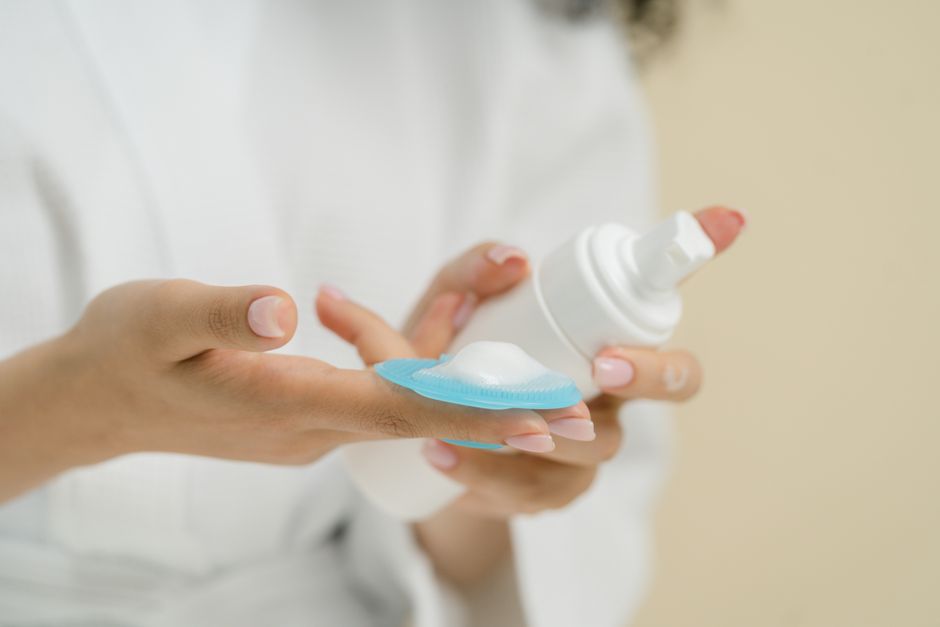
If you’re curious about pre-cleansing oils and want to explore this method further, you can learn more about building a Korean skincare routine that often incorporates this step. Just remember to listen to your skin.
Key takeaway: Pre-cleansing can be beneficial for sensitive skin to gently remove makeup and SPF, but double cleansing should be reserved for specific situations to avoid over-stripping.
Beyond the Wash: Essential Post-Cleansing Steps for a Happy Face
Your cleansing routine doesn’t end when you pat your face dry. What you do immediately after is just as critical for sensitive skin. This is where we resolve that open loop about pH balance. Remember how tap water can be alkaline? Your skin needs to get back to its slightly acidic state quickly.
1. The Immediate Hydration Rule: The moment your skin is clean and slightly damp, it’s prime time for hydration. This is called the “3-second rule” in some circles, meaning you should apply your next product within three seconds of cleansing to lock in moisture.
2. Toner: The pH Balancer (and more): A hydrating toner, specifically one that’s alcohol-