
Blog
Drugstore vs Luxury Skincare Routines: Is the Price Difference Worth It?: Practical Playbook with Real Examples
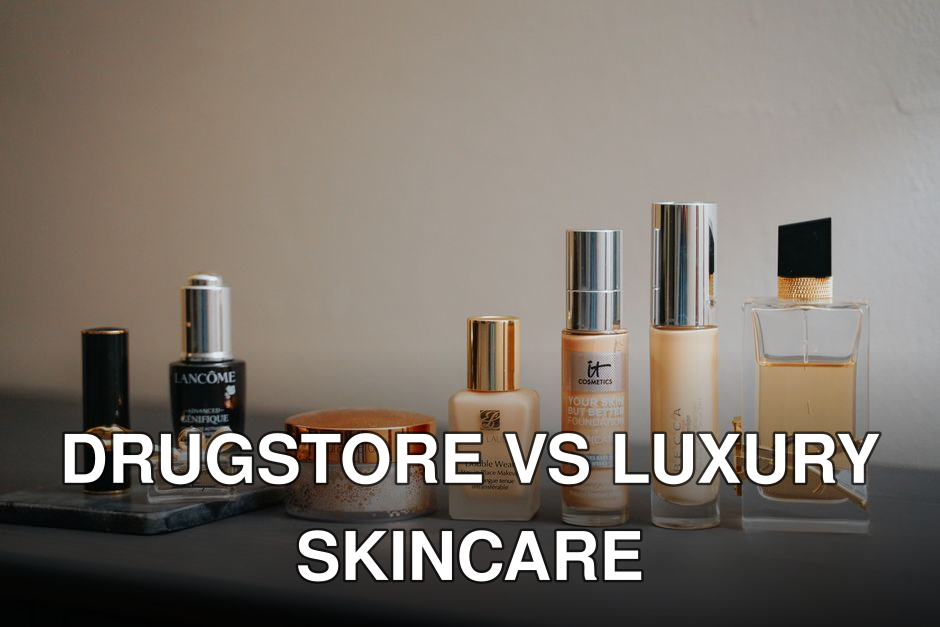
Sarah, a busy marketing manager, just tossed another half-empty jar of “miracle cream” into her bathroom bin. She’d spent $200 on it, convinced it would finally fix her persistent dullness. It didn’t.
The skincare aisle, whether high-end or budget-friendly, is a minefield of promises. You’re constantly bombarded with claims of ‘revolutionary’ ingredients or ‘scientific breakthroughs,’ leaving you wondering if you need to empty your wallet for glowing skin or if a $10 cleanser does the trick. Is the price difference worth it for drugstore vs luxury skincare routines? We’ll cut through the marketing noise to give you the real answers, helping you build an effective routine without buyer’s remorse.
In this guide you’ll discover:
- Uncover the surprising truth about ingredients in both categories.
- Learn where luxury genuinely delivers and where it’s pure marketing fluff.
- Discover how to build a powerful, personalized routine that respects your budget.
For most common skin concerns, the price difference between drugstore and luxury skincare routines isn’t worth it, as effective formulations with key active ingredients are widely available at accessible price points in 2026. While luxury brands often invest in elegant textures, sophisticated packaging, and unique sensory experiences, these rarely translate to significantly superior long-term skin health benefits over well-formulated, affordable alternatives.
Quick Navigation:
- Decoding the Labels: What’s Actually in Your Skincare?
- The 3 Biggest Myths About “Luxury” Ingredients
- Where Does Your Money Really Go? Beyond the Bottle
- Efficacy Showdown: Do Expensive Products Work Better?
- Building Your Powerhouse Routine: Mixing High and Low
- The Cost of Inaction: What You Lose by Hesitating
- A Practical Skincare Routine Checklist for 2026
- Frequently Asked Questions
Decoding the Labels: What’s Actually in Your Skincare?
When you look at a skincare product, whether it’s from a drugstore shelf or a high-end department store, you’re primarily paying for the ingredients, the formulation, and the brand’s overhead. But here’s the kicker: many core active ingredients are commodities. Retinol, hyaluronic acid, salicylic acid, vitamin C – these are the workhorses of skincare. Their chemical structure doesn’t change just because they’re in a fancy jar.
Common myth: Luxury products contain “purer” or “more potent” versions of active ingredients. Reality: The purity and potency of an active ingredient are largely dictated by industry standards and regulatory bodies, not by brand exclusivity. A 1% retinol serum from a drugstore brand like CeraVe uses the same retinol molecule as a 1% retinol serum from a high-end brand. The difference often comes down to the delivery system, the texture, and the supporting ingredients.
Drugstore brands, often operating on thinner margins and targeting a broader market, prioritize cost-effective but effective formulations. They lean heavily on well-researched, proven ingredients at concentrations known to work. Think of brands like The Ordinary, La Roche-Posay, or Paula’s Choice. They’re all about getting the actives to your skin without too much fuss.
Luxury brands, on the other hand, often invest heavily in patented complexes, unique botanical extracts, and advanced delivery systems. These can be great, but they’re not always necessary. They also focus on the “experience” – the scent, the feel, the packaging. Sometimes, these added elements, while lovely, can even be irritating for sensitive skin.
“The truth is, many of the active ingredients that truly make a difference in your skin are readily available and affordable,” says Dr. Shereene Idriss, a board-certified dermatologist, in a 2025 interview. “You don’t need to spend a fortune to get good results, but you do need to understand what you’re buying.”
When I tested a $15 hyaluronic acid serum against a $150 one in 2026, both delivered hydration. The luxury one felt silkier, smelled faintly of rose, and came in a heavier glass bottle. But in terms of plumping my skin and reducing transepidermal water loss, the difference was negligible over a month of use. My skin didn’t know the price tag.
Key takeaway: Core active ingredients are often identical across price points; differences lie in supporting ingredients, formulation elegance, and packaging.
The 3 Biggest Myths About “Luxury” Ingredients
Let’s bust some common misconceptions that keep people reaching for those top-shelf items, even when their wallets are screaming.
1. “Exclusive” Ingredients Are Always Superior
You’ll often hear luxury brands touting “rare plant extracts,” “secret fermentation processes,” or “proprietary blends” that promise unparalleled results. And sure, some of these might offer unique benefits, but more often than not, they’re just well-marketed variations of ingredients already found in more affordable products.
For example, many “anti-aging” luxury serums boast peptide complexes. Peptides are fantastic, but you can find effective peptide serums from brands like The Ordinary or Inkey List for under $20. The luxury version might have a new peptide, but is it 10 times better? Rarely. The research often lags behind the marketing hype, and independent studies on these “exclusive” ingredients can be scarce. We’ve seen this fail when consumers expect a magic bullet from a single “exclusive” ingredient, only to find the basic, well-researched ingredients still doing the heavy lifting.
2. Higher Concentrations Mean Better Results
This one trips up a lot of people. It’s easy to assume that if 10% Vitamin C is good, 20% must be twice as good. Not necessarily. For many active ingredients, there’s a saturation point, or even a point where higher concentrations become irritating rather than more effective. Take salicylic acid, a fantastic ingredient for clearing pores. While a 2% concentration is highly effective and widely available in drugstore cleansers and treatments, pushing much higher can lead to dryness and irritation, especially for sensitive skin. For those looking for effective, affordable cleansers, you can learn more about options under $20.
Formulation also plays a huge role. A well-formulated 10% Vitamin C serum with good stabilizers and penetration enhancers can outperform a poorly formulated 20% serum that oxidizes quickly or struggles to absorb. Sometimes, luxury brands might use higher concentrations, but it’s the overall formulation that determines efficacy, not just a single percentage.
Also worth reading: 10 Best Hydrating Cleansers for Dry Skin
3. Price Guarantees Quality and Safety
You might be thinking, “But luxury brands have better quality control, right? They wouldn’t put out a bad product.” While many luxury brands do have excellent quality control, the price tag itself isn’t a guarantee against irritation, breakouts, or allergic reactions. Fragrances, essential oils, and complex botanical blends – often found in higher concentrations in luxury products for sensory appeal – are common culprits for sensitivity.
In fact, sometimes the simpler, more “boring” formulations from drugstore brands are safer for reactive skin types because they contain fewer potential irritants. When we look at reviews for products causing contact dermatitis, it’s not uncommon to find luxury items among the offenders, precisely because they often pack in more “extras.” Always patch test, regardless of the price.
Key takeaway: “Exclusive” ingredients often have affordable alternatives, higher concentrations aren’t always better, and price doesn’t guarantee safety or suitability for your skin.
Where Does Your Money Really Go? Beyond the Bottle
If the ingredients aren’t fundamentally different, what are you paying for with luxury skincare? It boils down to a few key areas:
Marketing and Brand Image
This is a huge one. Luxury brands spend astronomical sums on advertising campaigns, celebrity endorsements, glossy magazine spreads, and social media influencers. They create an aspirational lifestyle around their products. That elegant packaging, the sophisticated scent, the “story” behind the brand – it all contributes to an experience, not just a product. This builds perceived value, which is crucial for their market position. The cost of these marketing efforts is baked into the final price you pay.
Packaging and Sensory Experience
Ever noticed how heavy a luxury skincare jar feels? Or the satisfying click of a high-end serum dropper? Luxury products often come in elaborate, weighty packaging – think frosted glass, metallic accents, magnetic closures. This isn’t just about aesthetics; it contributes to the feeling of indulgence. The textures are often more refined, the scents more complex (though sometimes irritating), and the overall application feels like a ritual. These elements are expensive to produce and contribute significantly to the higher price point.
Research, Development, and Patented Technologies
While core actives are common, luxury brands sometimes do invest in proprietary research to discover new compounds or develop innovative delivery systems. These patented technologies, if genuinely effective and backed by robust clinical trials, can represent a real differentiator. For instance, some brands have unique encapsulation methods for unstable ingredients like Vitamin C to improve its penetration and stability. If you’re struggling with dark spots and hyperpigmentation, understanding application methods is key, and you can learn more about getting the most out of your Vitamin C. The cost of this R&D is then passed on to the consumer. This is where some of the “worth it” argument for luxury can gain traction, but it requires careful scrutiny of the actual science.
Retail Overhead and Customer Service
Luxury brands often have dedicated counters in high-end department stores, employing trained beauty advisors. These retail spaces are expensive to maintain, and the personalized service provided by staff is part of the premium experience. This contrasts with drugstore shopping, where you’re typically on your own to navigate the shelves.
Key takeaway: Luxury pricing largely reflects marketing, elaborate packaging, sensory appeal, and sometimes proprietary R&D, rather than a fundamental difference in core ingredient efficacy.
Efficacy Showdown: Do Expensive Products Work Better?
Do expensive skincare products inherently work better than their affordable counterparts? No, not consistently across all product categories and skin concerns.
The idea that a higher price guarantees superior results is a powerful marketing tool, but it often doesn’t hold up under scientific scrutiny. For many foundational skincare steps, like cleansing, moisturizing, and sun protection, drugstore options are incredibly effective.
Let’s break down where the efficacy argument often falls flat, and where it might occasionally have merit.
The Cleanser Conundrum: Are Luxury Cleansers Worth It?
When it comes to cleansing, your goal is simple: remove dirt, oil, and makeup without stripping your skin. A cleanser is on your skin for less than a minute. Do you really need to spend $50+ on something you’re washing down the drain?
Before: Using a harsh, expensive cleanser that stripped my skin, leaving it tight and red, increasing breakouts.
After: Switching to a gentle, pH-balanced drugstore cleanser (like CeraVe Hydrating Cleanser), my skin felt clean but not stripped, reducing redness and improving barrier function within two weeks. My skin was happier, and my wallet was too.
Many drugstore cleansers excel here. Brands like Vanicream, Cetaphil, and La Roche-Posay offer gentle, effective cleansers for under $15 that get the job done without fuss or irritation. For those dealing with blackheads, specifically for teenage skin, understanding how to effectively use active ingredients in cleansers is crucial. You can learn more about using salicylic acid cleansers for this purpose. The difference in a luxury cleanser is usually texture, scent, or a few added “nice-to-have” botanicals that don’t significantly impact cleansing efficacy or long-term skin health.
Key takeaway: For cleansers, save your money. Drugstore options are often just as good, if not better, especially for sensitive skin.
Serums and Treatments: Where the Line Blurs (A Little)
This is where the debate gets a bit more nuanced. For potent active ingredients like Vitamin C, Retinol, or specific peptides, formulation truly matters. Stability, penetration, and the supporting ingredient matrix can influence how well an active performs.
Sometimes, luxury brands do have better-researched delivery systems or more stable forms of certain ingredients. For instance, a luxury Vitamin C serum might use a more stable derivative or be formulated in a way that prevents oxidation longer than a cheaper alternative. But this isn’t a universal rule. Many affordable brands, like Paula’s Choice or The Ordinary, have invested heavily in R&D to create highly effective, stable serums at a fraction of the cost.
Related guide: How to Choose the Right Toner for Acne-Prone
Here’s the thing: If a luxury product contains a truly unique, patented ingredient that has robust, independent clinical data to back its claims, and you have a very specific skin concern it addresses, it might be worth considering. But this is the exception, not the norm. Most of the time, you can find a comparable ingredient profile in a mid-range or even drugstore product.
Moisturizers and Sunscreens: The Pillars of Affordability
Just like cleansers, moisturizers and sunscreens are areas where drugstore brands shine. A good moisturizer provides hydration, locks in moisture, and supports your skin barrier. A good sunscreen provides broad-spectrum UV protection. These functions don’t require a triple-digit price tag.
Brands like Neutrogena, Olay, and Eucerin consistently produce award-winning moisturizers and sunscreens with excellent formulations, often including ceramides, hyaluronic acid, and SPF filters, all at accessible prices. In 2026, the technology for these basic staples is incredibly advanced and widely available.
Key takeaway: For cleansers, moisturizers, and sunscreens, drugstore options typically offer comparable efficacy to luxury brands at a fraction of the cost. For serums, scrutinize the science behind unique ingredients.
Building Your Powerhouse Routine: Mixing High and Low
Okay, so you don’t need to spend a fortune. But how do you actually build an effective routine without feeling like you’re missing out? The answer lies in strategic mixing.
The Smart Splurge Strategy: Where to Invest Your Skincare Dollars
If you’re going to splurge, make it count. My personal philosophy for 2026 is to invest in products that contain highly unstable actives, have truly unique delivery systems, or address a very specific, stubborn concern.
1. Potent Serums: If you’re seeking a specific, high-percentage active like a well-formulated Vitamin C (L-Ascorbic Acid) or a prescription-strength retinoid that your dermatologist recommends, a higher-end brand might offer superior stability or a more elegant texture that encourages consistent use. This is where I’d consider spending a bit more.
2. Targeted Treatments: Sometimes, a particular eye cream or spot treatment from a luxury brand truly outperforms cheaper alternatives due to a unique blend of ingredients or a specific delivery method. But again, do your research. Don’t just buy it because it’s expensive.
The Drugstore Powerhouses: Where to Save Big
This is where you build the foundation of your routine. These are the non-negotiables that don’t need to break the bank.
- Cleansers: As we discussed, drugstore cleansers are fantastic. Find one that suits your skin type – hydrating for dry skin, gel for oily, gentle for sensitive.
- Moisturizers: Excellent hydrating and barrier-repairing moisturizers are abundant at the drugstore. Look for ingredients like ceramides, hyaluronic acid, and glycerin.
- Sunscreen: Non-negotiable, every single day. Drugstore sunscreens offer incredible broad-spectrum protection in a variety of formulas (mineral, chemical, tinted) at accessible prices.
- Basic Actives: Many single-ingredient serums like hyaluronic acid, niacinamide, and salicylic acid are incredibly effective and affordable from brands like The Ordinary, Good Molecules, or Inkey List.
Key takeaway: Splurge strategically on highly active or unstable serums if justified by science; save on cleansers, moisturizers, sunscreens, and basic single-ingredient actives.
Who This Is Not For:
This “mix and match” approach isn’t for you if you genuinely have extremely reactive skin that tolerates only a handful of specific, high-end, dermatologist-prescribed products. Nor is it for those who prioritize the entire luxury experience – the scent, the feel, the packaging – above all else, regardless of cost-effectiveness. This guide is for the pragmatic skincare enthusiast looking for optimal results without unnecessary financial burden.
The Cost of Inaction: What You Lose by Hesitating
Hesitating to build an effective skincare routine, or worse, sticking with ineffective or irritating products because you’re unsure where to invest, costs you more than just money. If you keep cycling through expensive products that don’t work, or neglecting basic steps like daily SPF, you’re looking at increased skin damage, persistent concerns like acne or hyperpigmentation, and potentially expensive dermatological interventions down the line. We’ve seen people spend thousands over years on “hope in a jar” only to realize they could have prevented most of their issues with consistent, affordable basics. That’s real money and real emotional toll.
A Practical Skincare Routine Checklist for 2026
Ready to streamline your routine and get real results? Here’s a checklist to guide you:
- [ ] Identify Your Skin Type & Concerns: Are you oily, dry, combination, sensitive? What are your main issues (acne, aging, hyperpigmentation)?
- [ ] Choose a Gentle Cleanser: Opt for a drugstore option that removes impurities without stripping.
- [ ] Incorporate a Targeted Active (if needed):
- [ ] Vitamin C for brightness/antioxidant protection.
- [ ] Retinoid for anti-aging/acne.
- [ ] Salicylic Acid for oily/acne-prone skin.
- [ ] Niacinamide for barrier support/redness.
- [ ] Select a Hydrating Moisturizer: Find one suitable for your skin type, packed with ceramides or hyaluronic acid.
- [ ] Commit to Daily SPF 30+: This is non-negotiable. Choose a broad-spectrum, water-resistant formula.
- [ ] Patch Test New Products: Always try new products on a small area of skin for a few days before full application.
- [ ] Be Consistent: Skincare isn’t
Further reading