
Blog
How to Clear Clogged Pores and Blackheads Safely (Beginner’s Guide): Practical Playbook with Real Examples

Sarah, a marketing manager in her late twenties, spent last Tuesday staring into her magnified bathroom mirror, meticulously trying to “pop” a stubborn blackhead that had taken up residence on her nose. She’d tried strips, scrubs, and even a questionable DIY mask she found on TikTok. Each attempt left her skin red, irritated, and the blackhead, frustratingly, still there – sometimes even worse. She’s not alone.
The struggle with clogged pores and blackheads is real, and it’s a problem that affects millions. Left untreated, these seemingly minor skin issues can escalate into painful breakouts, post-inflammatory hyperpigmentation, and even permanent scarring. The good news is, you don’t have to resort to aggressive, damaging tactics. There are proven, safe methods to achieve clearer skin without the irritation or long-term damage.
In this essential guide, you’ll discover:
- The actual science behind clogged pores and why some methods just don’t work.
- A step-by-step, beginner-friendly routine to safely clear existing blackheads and prevent new ones.
- Honest insights into popular treatments, separating effective solutions from costly fads in 2026.
***
Quick Navigation
- What Exactly Are Clogged Pores and Blackheads?
- Why Your Pores Get Clogged (And What It Really Costs You)
- The 3 Pillars of Daily Pore Maintenance for 2026
- Chemical Exfoliants: Your Skin’s Best Friend for Blackheads?
- Physical Exfoliation: When to Scrub, When to Stop
- Targeted Treatments: What Works and What’s a Waste of Money
- The 2026 Guide to Professional Extractions: Worth the Splurge?
- Beyond the Basics: Advanced Strategies to Keep Pores Clear
- Frequently Asked Questions
***
What Exactly Are Clogged Pores and Blackheads?
A clogged pore is simply a hair follicle that’s become blocked. Our skin has thousands of these tiny openings, each containing a hair and a sebaceous gland. These glands produce sebum, an oily substance essential for keeping our skin and hair moisturized.
When sebum, dead skin cells, and sometimes even makeup or environmental debris mix together and get trapped in a pore, they form a plug. If this plug is open to the air, the melanin in the dead skin cells oxidizes, turning dark – that’s your classic blackhead, also known as an open comedone. If the pore is closed, it forms a whitehead (a closed comedone).
Key takeaway: Clogged pores and blackheads are a natural occurrence when sebum and dead skin cells get trapped. Oxidation turns open plugs dark, creating blackheads.
***
Why Your Pores Get Clogged (And What It Really Costs You)
You might think blackheads are just a cosmetic nuisance, but ignoring them can lead to a cascade of problems. Think of a clogged drain in your sink: it starts with a few hairs, then accumulates more debris, eventually leading to a complete blockage and overflow. Your pores work similarly.
The Obvious Counterargument: “My blackheads aren’t that bad, I’ll just leave them alone.” While some might resolve on their own, the majority don’t. Leaving them unchecked creates an ideal breeding ground for P. acnes bacteria, which thrive in oxygen-deprived, sebum-rich environments. This often leads to inflammatory acne: those painful, red pimples and cysts.
Before:
| Issue | Impact |
| :————————– | :——————————————————————- |
| Untreated Blackheads | Increased risk of painful acne breakouts, visible skin texture issues |
| DIY Extraction Attempts | Skin irritation, redness, potential scarring, infection risk |
| Inconsistent Routine | Persistent dullness, uneven skin tone, enlarged pore appearance |
After:
| Solution | Benefit |
| :—————————- | :———————————————————————– |
| Safe Clearing Methods | Smoother, clearer skin, significantly reduced breakout frequency |
| Professional Guidance | Minimized risk of scarring and irritation, targeted treatment |
Also worth reading: 10 Best Hydrating Cleansers for Dry Skin
| Consistent Skincare | Improved skin radiance, minimized pore visibility, healthier skin barrier |
The cost of inaction isn’t just about appearance; it’s about skin health. Chronic inflammation from persistent breakouts can lead to post-inflammatory hyperpigmentation (dark spots) that linger for months, or even years, and in severe cases, permanent pitted scars. We’ve seen this fail when clients neglect their skin for too long, then come in needing extensive and expensive treatments to reverse the damage.
Common myth: Blackheads are caused by dirt. Reality: Blackheads are caused by oxidized sebum and dead skin cells, not a lack of hygiene. Over-washing can actually strip your skin, leading to more oil production.
But that’s only half the picture – here’s where most people get stuck.
Key takeaway: Ignoring clogged pores can lead to painful acne, scarring, and hyperpigmentation. It’s not about dirt, but about oxidized sebum and dead skin cells.
***
The 3 Pillars of Daily Pore Maintenance for 2026
To safely clear and prevent clogged pores, you need a consistent, gentle routine. Think of it as a three-pronged attack: cleanse, treat, and protect. This isn’t groundbreaking news in 2026, but the application of these principles is where people usually stumble.
1. Gentle Cleansing: The Foundation
You need a cleanser that removes impurities without stripping your skin. Harsh cleansers can disrupt your skin’s natural barrier, leading to irritation and even more oil production as your skin tries to compensate.
- Choose Wisely: Look for cleansers labeled “non-comedogenic” (won’t clog pores) and “sulfate-free.” A creamy or gel-based cleanser is usually a good bet.
- Double Cleansing (Optional, but Recommended): If you wear makeup or heavy sunscreen, consider double cleansing in the evening. Start with an oil-based cleanser or balm to dissolve oil-soluble impurities, then follow with a water-based cleanser. This is a major shift for really getting rid of everything that settles into pores throughout the day.
- Technique Matters: Gently massage the cleanser onto damp skin for 60 seconds. Don’t scrub. Rinse thoroughly with lukewarm water.
When I tested various cleansing bars and wipes in 2026, I found that many “oil-control” options were overly harsh, leaving my sensitive skin feeling tight and reactive. Stick to gentle. A good example is a hydrating gel cleanser, which effectively removes impurities without causing dryness, a common issue for many. For those with sensitive skin, finding the right gentle face scrub is crucial to avoid irritation; you can learn more about balancing exfoliation with gentleness.
2. Targeted Treatment: Exfoliation is Key
This is where you directly address the buildup of dead skin cells and sebum. We’ll dive deeper into specific exfoliants in the next sections, but for now, understand that regular, gentle exfoliation is non-negotiable. It helps shed those sticky dead cells that would otherwise plug your pores.
3. Hydration and Protection: Don’t Skip It
Many beginners think that oily, blackhead-prone skin doesn’t need moisturizer. That’s a huge mistake. Dehydrated skin can actually produce more oil to compensate, creating a vicious cycle.
- Lightweight Hydration: Opt for a lightweight, non-comedogenic moisturizer. Look for ingredients like hyaluronic acid, glycerin, or ceramides. In 2026, there are fantastic lightweight drugstore options that won’t break the bank. You can learn more about choosing the best ones for oily/combination skin.
- Sunscreen is Your Best Friend: Daily broad-spectrum SPF 30+ is crucial. Sun damage can thicken skin and lead to more clogged pores over time, not to mention exacerbating hyperpigmentation from past breakouts.
Key takeaway: A consistent routine of gentle cleansing, targeted exfoliation, and lightweight hydration with SPF protection is fundamental for preventing and clearing clogged pores.
***
Chemical Exfoliants: Your Skin’s Best Friend for Blackheads?
Chemical exfoliants are acids that dissolve the “glue” holding dead skin cells together. Don’t let the word “chemical” scare you; they are often gentler and more effective than physical scrubs when used correctly. For blackheads and clogged pores, one type reigns supreme: Beta Hydroxy Acids (BHAs).
Beta Hydroxy Acids (BHAs) – Salicylic Acid
Salicylic acid is the hero here. It’s oil-soluble, meaning it can penetrate through sebum into the pore lining. This allows it to:
- Dissolve Clogs: Break down the mixture of oil and dead skin cells directly within the pore.
- Anti-inflammatory: Reduce redness and irritation, which is a big plus for acne-prone skin.
- Exfoliate Surface: Also helps shed dead cells from the skin’s surface.
You’ll typically find salicylic acid in cleansers, toners, serums, and spot treatments. For blackheads, a leave-on treatment (like a toner or serum) at a concentration of 0.5% to 2% is usually most effective. Start with a lower concentration and use it a few times a week, gradually increasing frequency if your skin tolerates it.
Alpha Hydroxy Acids (AHAs) – Glycolic, Lactic Acid
AHAs like glycolic and lactic acid are water-soluble. They primarily work on the skin’s surface, exfoliating dead skin cells and improving texture. While great for overall skin brightness and reducing hyperpigmentation, they don’t penetrate oil like BHAs do. This makes them less effective for directly clearing blackheads deep within the pore, but they can still help by keeping the surface clear of dead skin.
You might be thinking, “But my skin reacts to everything!” That’s a valid concern. The key is to start slow and listen to your skin. Patch test new products on a small area first. When I first started incorporating BHAs into my routine in 2018, I went in too aggressively. My skin rebelled with dryness and flaking. Now, I advocate for a “low and slow” approach.
Here’s a quick comparison of common exfoliants:
| Feature | Physical Scrub (Fine Grain) | AHA (Glycolic, Lactic) | BHA (Salicylic Acid) 🏆 |
| :————————– | :————————– | :——————— | :———————- |
| Pore Penetration | ❌ Limited | ❌ Limited | ✅ Deep into pores |
| Primary Action | Surface exfoliation | Surface exfoliation | Pore de-clogging |
| Oil Soluble | ❌ No | ❌ No | ✅ Yes |
| Anti-Inflammatory | ❌ No | ❌ No | ✅ Yes |
| Best for Blackheads | ⚠️ Indirectly | ⚠️ Indirectly | ✅ Yes |
| Immediate Feel | Smooth, sometimes tight | Smoother, brighter | Clearer, less oily |
| Risk of Irritation | ⚠️ Moderate (if overused) | ✅ Low to Moderate | ✅ Low to Moderate |
| Best for: | Occasional texture boost | Dullness, fine lines | Clogged pores, acne |
Related guide: How to Choose the Right Toner for Acne-Prone
Key takeaway: Salicylic acid (BHA) is your best bet for clearing blackheads because it’s oil-soluble and can penetrate deep into pores. Start with low concentrations and introduce it slowly.
***
Physical Exfoliation: When to Scrub, When to Stop
Physical exfoliants are products with small particles (like beads, sugar, or finely milled grains) that manually buff away dead skin cells. The appeal is immediate: you feel it working, and your skin feels smoother right away. But here’s where it gets tricky.
While physical scrubs can remove surface dead skin, they can’t reach deep into clogged pores like BHAs can. The biggest danger is that many scrubs are too harsh. Over-scrubbing can:
- Damage the Skin Barrier: Creating micro-tears that lead to irritation, redness, and increased sensitivity.
- Trigger More Oil: Your skin may overcompensate for the damage, leading to more sebum production.
- Spread Bacteria: If you have active breakouts, scrubbing can rupture pimples and spread bacteria, worsening the situation.
The Mistake Everyone Makes at Step 3: They reach for the harshest scrub they can find, thinking “more friction equals cleaner pores.” This is almost always counterproductive.
So, when should you use physical exfoliation?
- Infrequently: Once or twice a week, at most, for specific concerns like flaky skin that chemical exfoliants aren’t quite tackling.
- Gentle Formulations: Choose scrubs with very fine, uniform particles (like jojoba beads or finely milled rice powder). Avoid anything with jagged edges like crushed nuts or fruit pits.
- Light Touch: Use minimal pressure. Let the product do the work.
For most people, especially beginners dealing with blackheads, a chemical exfoliant like salicylic acid is a safer, more effective primary strategy. Save physical exfoliation for an occasional, gentle polish, if at all.
Key takeaway: Physical exfoliation should be used sparingly and gently, if at all, as harsh scrubs can damage the skin barrier and worsen issues. Chemical exfoliants are generally more effective and safer for clearing blackheads.
***
Targeted Treatments: What Works and What’s a Waste of Money
Beyond daily maintenance and exfoliants, there are specific treatments you can add to your routine. Some are incredibly effective, while others are just marketing hype.
Retinoids: The Gold Standard (Prescription & OTC)
Retinoids (Vitamin A derivatives) are powerful. They work by increasing cell turnover, which helps prevent dead skin cells from clumping together and clogging pores. They also promote collagen production and can improve overall skin texture.
- Tretinoin (Prescription): The most potent form, highly effective for severe acne and significant blackhead issues. Requires a dermatologist’s prescription.
- Adapalene (OTC Differin Gel): Available over-the-counter since 2016, adapalene is a retinoid specifically designed for acne. It’s less irritating than tretinoin but still highly effective. Start using it 2-3 times a week at night, gradually increasing frequency.
- Retinol (OTC): A milder form of retinoid found in many anti-aging products. It’s less potent than adapalene or tretinoin but still beneficial for pore health and texture over time.
Word of Caution: Retinoids can cause initial dryness, redness, and purging (a temporary increase in breakouts as your skin adjusts). This is normal. Always use sunscreen diligently when using retinoids, as they make your skin more sun-sensitive.
Niacinamide (Vitamin B3): The Multi-Tasker
While not a direct blackhead remover, niacinamide is an excellent supporting player. It helps:
- Regulate Oil Production: Can reduce the amount of sebum your skin produces, indirectly helping to prevent clogs.
- Reduce Inflammation: Calms redness and irritation.
- Strengthen Skin Barrier: Improves skin’s resilience.
You’ll find niacinamide in serums, moisturizers, and toners, usually at concentrations of 5-10%. It’s generally well-tolerated and pairs well with retinoids and BHAs.
Clay Masks: A Temporary Fix
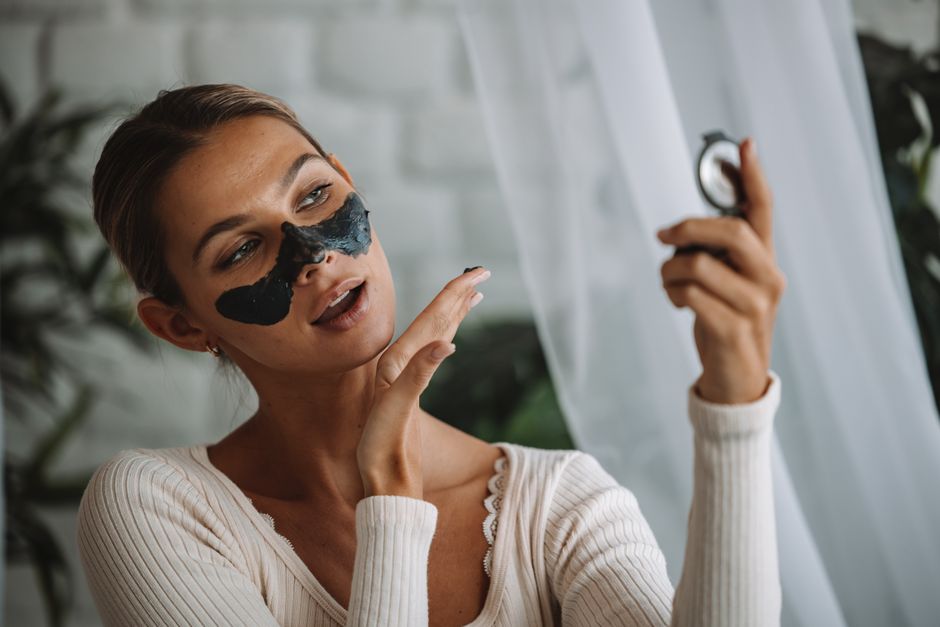
Clay masks can absorb excess oil and temporarily draw out impurities, making pores appear smaller. They can be a nice weekly treat, but they won’t permanently clear blackheads or prevent them from forming. Think of them as a quick refresh, not a long-term solution.
Pore Strips & Vacuum Tools: Proceed with Extreme Caution
These tools offer instant gratification by pulling out visible blackhead tops. However, they don’t remove the entire plug, and they can:
- Damage Skin: Especially pore strips can be harsh and cause irritation, especially on sensitive skin. Vacuum tools, if used with too much suction, can cause bruising or broken capillaries.
- Stretch Pores: Repeated forceful removal can potentially stretch pores over time, making them appear larger.
- Not a Solution: They don’t address the root cause of clogged pores.
In 2026, the consensus among dermatologists is clear: avoid pore strips and vacuum tools for regular use. There’s just too much risk for too little long-term gain.
Key takeaway: Retinoids (adapalene, retinol) are highly effective for preventing and treating clogged pores by increasing cell turnover. Niacinamide supports skin health and oil regulation. Clay masks offer temporary oil absorption. Avoid pore strips and vacuum tools due to potential skin damage.
***
The 2026 Guide to Professional Extractions: Worth the Splurge?
Sometimes, despite your best efforts, some blackheads just won’t budge. This is where professional help comes in. A trained esthetician or dermatologist can perform extra