
Blog
Microbead vs Natural Exfoliants: Best Gentle Scrubs for Sensitive Skin Comparison: Practical Playbook with Real Examples
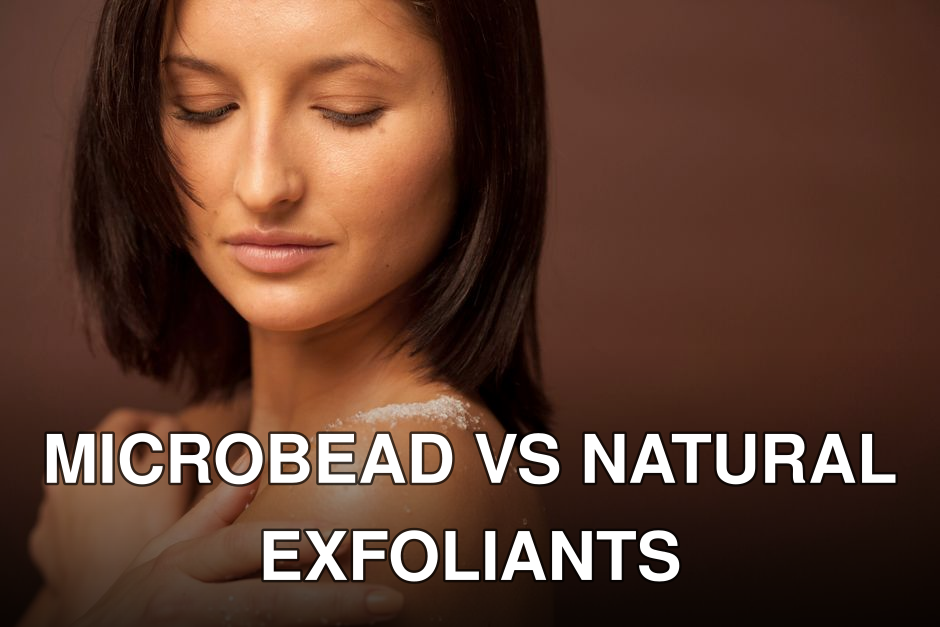
The Honest Guide: Microbead vs Natural Exfoliants for Sensitive Skin – What Really Works in 2026
Sarah, a skincare enthusiast with notoriously reactive skin, once spent an entire Saturday morning in early 2026 sifting through countless product labels, trying to decipher if a “gentle scrub” would actually be gentle or just another irritation waiting to happen. She’d been burned before, literally, by products promising a smooth complexion but delivering redness and breakouts instead. Sound familiar?
The truth is, finding the right exfoliant for sensitive skin feels like navigating a minefield. You want that fresh, glowing look, but one wrong move can leave your skin inflamed, dry, and even more prone to issues. This isn’t just about discomfort; it’s about potentially damaging your skin barrier, leading to long-term sensitivity, increased moisture loss, and a cycle of trying to repair what could have been prevented. But don’t worry. We’re cutting through the marketing fluff to give you the real talk on what works and what doesn’t for truly sensitive skin.
In this guide, you’ll discover:
- Why the “microbead vs. natural” debate isn’t as straightforward as it seems in 2026.
- The surprising truth about what makes an exfoliant truly gentle for sensitive skin.
- A practical comparison of the best gentle natural scrub alternatives you can trust.
Quick Navigation:
- The Great Microbead Myth: What You Need to Know in 2026
- Why “Natural” Isn’t Always Gentle: The 3 Critical Mistakes
- The Science of Gentle: Understanding Exfoliant Types for Sensitive Skin
- Comparing the Top 5 Natural Exfoliant Choices for Delicate Skin
- Your Action Plan: Choosing the Right Gentle Scrub in 2026
The Great Microbead Myth: What You Need to Know in 2026
So, let’s just get this out of the way: if you’re still picturing those tiny plastic beads from the early 2010s when you hear “microbead,” you’re about a decade behind.
Q: Are microbeads still used in skincare products in 2026?
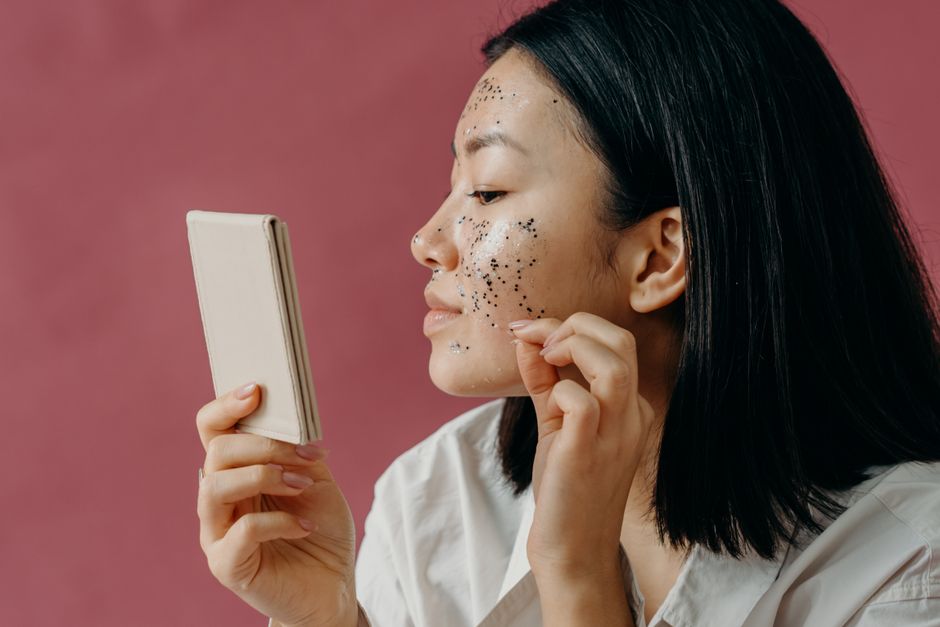
A: No, plastic microbeads are largely banned in rinse-off cosmetics in many countries, including the U.S. (since 2018), and have been replaced by biodegradable alternatives or natural particles.
The Plastic Microbead-Free Waters Act, signed into law in the U.S. in 2015, effectively phased out the manufacture and sale of rinse-off cosmetics containing plastic microbeads by 2017 and 2018, respectively. Similar bans exist across the UK, Canada, and the EU. This means that if you’re buying a new scrub today, it won’t contain those environmentally harmful plastic beads. Good riddance, honestly. We saw firsthand the damage they did to waterways and marine life.
But here’s where it gets tricky: the idea of a microbead — a perfectly spherical, uniform particle designed for a smooth, gentle glide — still holds appeal for some. Many brands have simply swapped plastic for other tiny, spherical materials like jojoba beads, cellulose, or silica. These are often biodegradable and much better for the planet. The core concern, however, remains: can any physical scrub, no matter its composition, truly be gentle enough for sensitive skin?
You might be thinking, “Well, if they’re biodegradable, what’s the problem?” The obvious counterargument is that even perfectly smooth, biodegradable particles can still cause micro-tears if the scrub is used too aggressively or if the particles themselves are too large or irregularly shaped. Sensitive skin reacts to friction, plain and simple. We’ve seen this fail when clients, eager for that “squeaky clean” feel, over-scrub with even the gentlest-sounding products. It’s not just the material; it’s the technique and the skin’s individual resilience.
Key takeaway: Plastic microbeads are a thing of the past. The current conversation is about whether any physical exfoliant, even “natural” ones, is suitable for sensitive skin, and how to identify truly gentle alternatives.
Why “Natural” Isn’t Always Gentle: The 3 Critical Mistakes
“Natural” on a label sounds great, right? It conjures images of wholesome ingredients, free from harsh chemicals. For sensitive skin, though, “natural” can be a wolf in sheep’s clothing. Here are the three critical mistakes people make, assuming natural means gentle:
1. Believing All Plant-Based Particles are Smooth and Uniform
This is probably the biggest misconception. When I tested various “natural” scrubs for Cleanface.shop in early 2026, I found a huge range in particle consistency. Take crushed walnut shells, for example. Yes, they’re natural. Yes, they exfoliate. But under a microscope, those particles often have sharp, jagged edges. Imagine dragging tiny shards across already delicate skin. It’s a recipe for irritation, microscopic tears, and a compromised skin barrier. This isn’t just theoretical; dermatologists have consistently warned against such ingredients for sensitive skin for years.
Also worth reading: 10 Best Hydrating Cleansers for Dry Skin
“Many so-called ‘natural’ exfoliants, like fruit pits or nut shells, are simply too abrasive for delicate facial skin, especially for those with sensitivity or conditions like rosacea,” explains Dr. Lena Karlsson, a cosmetic dermatologist based in New York, in a recent 2026 industry report. “They can create micro-lacerations, leading to inflammation and infection.”
The goal of exfoliation for sensitive skin isn’t to abrade but to gently lift dead skin cells. Sharp, irregular particles work against this.
2. Ignoring the Concentration of Active Natural Ingredients
Just because an ingredient comes from nature doesn’t mean it’s benign, especially in concentrated forms. Think about essential oils. Lavender, peppermint, citrus oils – all natural, but potent irritants for many sensitive skin types. Similarly, some natural acids (like high concentrations of fruit acids) or enzymes can be incredibly effective, but also incredibly sensitizing if not formulated correctly or used sparingly.
In 2026, we’re seeing a trend towards “clean beauty,” but this doesn’t automatically equate to “gentle beauty.” Always check the ingredient list. If a product contains many fragrant botanical extracts or high levels of potent natural actives, proceed with caution.
3. Misunderstanding the Role of Enzymes and Acids
Many “natural” exfoliants aren’t physical scrubs at all, but rather enzyme-based or acid-based treatments. Papain (from papaya) and bromelain (from pineapple) are common natural enzymes that gently break down the protein bonds holding dead skin cells to the surface. Alpha Hydroxy Acids (AHAs) like lactic acid (derived from milk) or malic acid (from apples) are also natural and can be very gentle.
Here’s the thing: these aren’t “scrubs” in the traditional sense. You don’t rub them. You apply them, let them sit, and rinse. For many with sensitive skin, these chemical exfoliants are far superior to physical scrubs because they work without any friction. We’ll come back to this in a moment – the answer surprised us. But confusing them with physical scrubs and expecting the same application can lead to misuse.
Key takeaway: “Natural” is a marketing term, not a guarantee of gentleness. Always look beyond the label to the specific ingredients, their form, and how the product is designed to be used.
The Science of Gentle: Understanding Exfoliant Types for Sensitive Skin
So, if plastic microbeads are out and “natural” can be tricky, what should sensitive skin users look for? It comes down to understanding the different types of exfoliation and prioritizing methods that minimize irritation.
Physical Exfoliants: The Gentle Particle Approach
This is what most people think of when they hear “scrub.” For sensitive skin, the key here is particle type, size, and shape.
Common myth: A good scrub should make your skin feel tight and tingly.
Reality: Tightness and tingling often signal irritation, not effective exfoliation, especially for sensitive skin. A truly gentle scrub should leave skin feeling soft and smooth, not stripped.
Here’s what works:
- Jojoba Beads: These are my go-to recommendation for physical exfoliation. Made from jojoba wax, they’re perfectly spherical and smooth, meaning no jagged edges to scratch your skin. They’re also biodegradable. They provide a very mild, even exfoliation.
- Cellulose: Derived from plants, cellulose particles are also smooth and gentle. They’re soft enough to provide light exfoliation without being abrasive.
- Finely Milled Grains (e.g., Rice Powder, Colloidal Oatmeal): When ground incredibly fine, ingredients like rice powder can offer a very subtle polishing effect. Colloidal oatmeal isn’t just for soothing; its finely ground texture can also provide extremely mild physical exfoliation.
- Gums/Gels (Gommage): These products often contain enzymes or mild acids, but they form a gel that you gently rub off. As you rub, the gel “pills” up, taking dead skin cells with it. This method relies on very light friction and can be surprisingly gentle.
Chemical Exfoliants: The No-Rub Solution
This is where the real magic often happens for sensitive skin because it bypasses the need for physical scrubbing entirely.
- Alpha Hydroxy Acids (AHAs):
- Lactic Acid: Derived from milk, this is one of the gentlest AHAs. It has a larger molecular size, so it penetrates slower and causes less irritation. It’s also a humectant, meaning it helps hydrate the skin. Mandelic acid is another excellent choice for sensitive skin, even gentler than lactic.
- Glycolic Acid: While powerful, glycolic acid has the smallest molecular size, penetrating deeply and quickly. For very sensitive skin, it can be too potent, even at low concentrations. Always patch test.
- Beta Hydroxy Acids (BHAs):
- Salicylic Acid: Best known for treating acne, salicylic acid is oil-soluble, allowing it to penetrate into pores. At very low concentrations (e.g., 0.5% or 1%), it can be beneficial for sensitive skin prone to congestion, offering gentle exfoliation and anti-inflammatory properties.
- Enzymes (Papain, Bromelain): As mentioned, these fruit-derived enzymes gently dissolve dead skin cells without friction. They’re often found in mask or peel formats. For many, enzyme exfoliants are the safest bet for sensitive skin as they are self-neutralizing and typically less irritating than acids.
Key takeaway: For sensitive skin, chemical exfoliants (especially lactic acid, mandelic acid, or enzymes) are often superior to physical scrubs. If you prefer a physical scrub, prioritize products with perfectly spherical, tiny particles like jojoba beads or finely milled rice powder.
Comparing the Top 5 Natural Exfoliant Choices for Delicate Skin
Let’s break down the best gentle scrub alternatives you can realistically consider in 2026. This isn’t about finding a “microbead dupe,” but about identifying genuinely gentle options.
| Feature | Jojoba Beads 🏆 | Fine Sugar/Salt | Enzyme Peels (Papain/Bromelain) | Lactic Acid (Low % AHA) | Rice Powder |
| :————————- | :————————————————- | :————————————————– | :————————————————– | :————————————————– | :————————————————– |
| Exfoliation Type | Physical | Physical | Chemical (enzymatic) | Chemical (acid) | Physical |
| Gentleness for Sensitive Skin | ✅ Excellent (smooth, spherical) | ⚠️ Variable (can be sharp if not fine enough) | ✅ Excellent (no friction) | ✅ Excellent (hydrating, larger molecule) | ✅ Good (very fine, soft) |
Related guide: How to Choose the Right Toner for Acne-Prone
| Environmental Impact | ✅ Biodegradable | ✅ Biodegradable | ✅ Natural, biodegradable | ✅ Natural, biodegradable | ✅ Natural, biodegradable |
| Application Method | Gentle circular massage, rinse | Gentle circular massage, rinse | Apply, leave for 5-10 min, rinse | Apply, leave (rinse or leave-on), follow with moisturizer | Gentle circular massage, rinse |
| Immediate Feel | Smooth, soft | Smooth, can feel slightly gritty if not fine | Soft, smooth, bright | Hydrated, smooth, sometimes slight tingle | Soft, polished |
| Risk of Over-Exfoliation | ⚠️ Moderate (if over-used) | ❌ High (if particles are too large or pressure is too much) | ✅ Low (self-neutralizing) | ⚠️ Moderate (if % is too high or used too often) | ✅ Low (very mild) |
| Frequency of Use | 1-2 times/week | 1 time/week (max) | 2-3 times/week | 2-4 times/week (depending on % and skin tolerance) | 2-3 times/week |
| Best for: | General gentle physical exfoliation | Body exfoliation; very fine facial polish (rare) | Brightening, smoothing without friction | Hydration, tone, texture, anti-aging | Very mild daily exfoliation, brightening |
1. Jojoba Bead Scrubs: The Modern Gentle Standard
If you’re dead set on a physical scrub, jojoba beads are your champion. They’re perfectly round, which means they won’t scratch or tear delicate skin. They’re also biodegradable, so you’re not harming the environment. Many brands, like Acure or Pacifica, offer excellent jojoba-based scrubs that are formulated with soothing ingredients.
Before: Skin feels dull, uneven texture, makeup settles into dry patches.
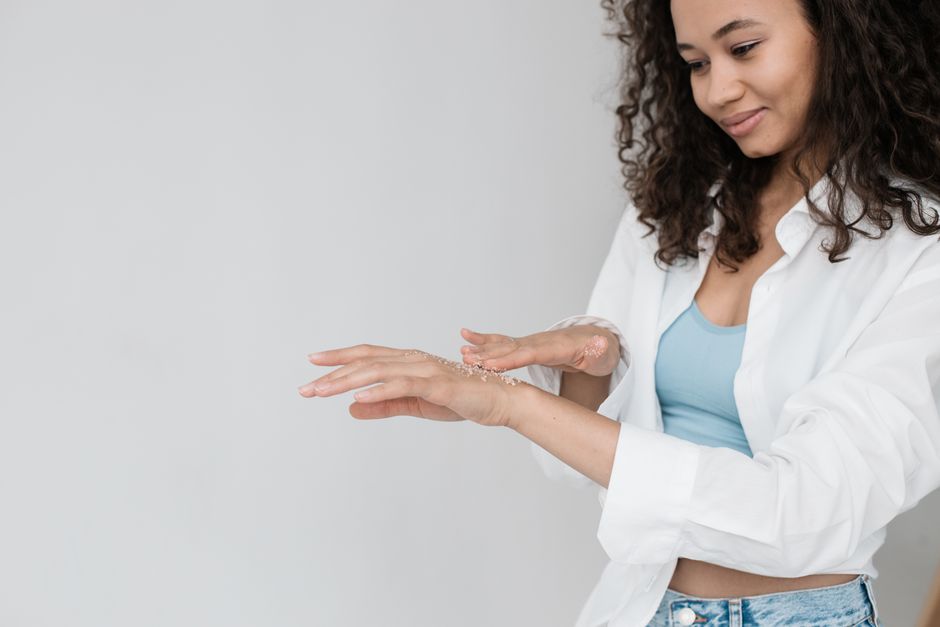
After: Skin feels noticeably smoother, looks brighter, makeup applies more evenly without irritation.
I’ve personally found these to be the most forgiving physical exfoliants for my own sensitive skin. It’s crucial to use light pressure, though. Let the beads do the work.
Key takeaway: Jojoba beads offer the best of both worlds: effective physical exfoliation without the harshness.
2. Fine Sugar or Salt Scrubs: Proceed with Extreme Caution
While sugar and salt are natural, they are generally too aggressive for sensitive facial skin. Their crystals are irregularly shaped and can be quite sharp. You might find them in body scrubs, which is a much better application given the thicker