
Blog
Gentle Face Scrubs vs Exfoliating Cleansers for Sensitive Skin: Practical Playbook with Real Examples
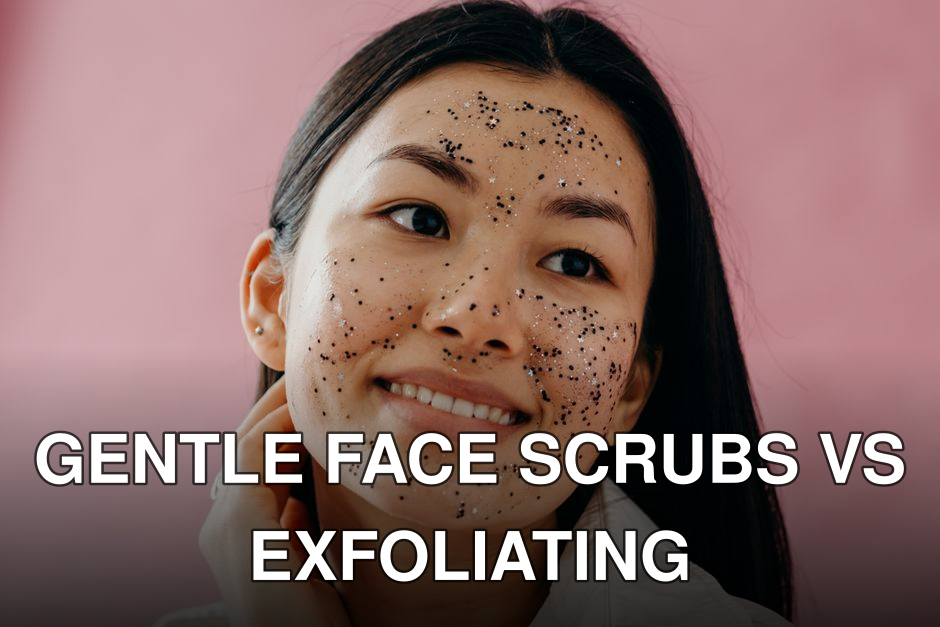
The Brutal Truth: Gentle Face Scrubs vs. Exfoliating Cleansers for Sensitive Skin in 2026
Maria, a freelance designer with skin that reacts to just about everything, spent last Tuesday with a red, blotchy face after trying a new “gentle” scrub. It promised a radiant glow, but delivered irritation and a definite setback in her skincare routine. She just wanted something effective that wouldn’t make her look like she’d wrestled a cactus.
Sound familiar? Navigating the world of exfoliation when you have sensitive skin feels like walking a tightrope over a pit of angry breakouts. One wrong move, and you’re dealing with redness, dryness, or worse, a compromised skin barrier. The real problem isn’t just finding an exfoliator, it’s finding the right one that actually works without causing a war on your face. This guide cuts through the noise to help you pick your champion and finally achieve that healthy, calm skin you’ve been chasing.
In this guide you’ll discover:
- Why most “gentle” scrubs are still a risky gamble for sensitive complexions.
- The surprising science behind why exfoliating cleansers often win the battle against irritation.
- A 3-step checklist to confidently choose your next sensitive skin hero.
When you’re trying to figure out if a gentle face scrub or an exfoliating cleanser is better for your sensitive skin, the short answer is usually an exfoliating cleanser. These formulations offer controlled, even exfoliation with less potential for physical damage, making them generally safer and more effective for reactive skin types in 2026.
Quick Navigation:
- Why Sensitive Skin Demands a Different Approach
- Gentle Face Scrubs: The Appeal and the Peril
- Exfoliating Cleansers: Your 2026 Go-To for Calm, Clear Skin
- The 5 Critical Differences: Scrubs vs. Cleansers for Sensitive Skin
- Choosing Your Champion: A 3-Step Checklist for Sensitive Skin
- Beyond the Bottle: 4 Keys to Maximizing Your Exfoliation Benefits
- Frequently Asked Questions
Why Sensitive Skin Demands a Different Approach
Sensitive skin isn’t just “finicky”; it’s a skin type characterized by a compromised barrier, leading to heightened reactivity to environmental factors, ingredients, and physical stimuli. For someone with sensitive skin, even a slight misstep in their routine can trigger redness, itching, burning, or dryness. This means that when it comes to exfoliation, the stakes are incredibly high. We’re not just aiming for clear pores; we’re trying to achieve it without sending your skin into a full-blown meltdown.
The cost of inaction, or rather, the cost of wrong action, here is significant. Continuing to use harsh or unsuitable exfoliants can lead to chronic inflammation, worsen conditions like rosacea or eczema, and prematurely age the skin by repeatedly damaging its protective barrier. You’ll spend more money on soothing creams, more time recovering from flare-ups, and more emotional energy feeling frustrated with your reflection. In 2026, with so many advanced options available, there’s no excuse for sticking to a routine that actively harms your skin.
This guide isn’t for everyone. If your skin can handle sandpaper and harsh acids without a blink, honestly, you probably don’t need to read further. This is specifically for those of us who dread trying new products, whose skin turns red just looking at an ingredient list, and who truly need a gentle, effective path to exfoliation.
Key takeaway: Sensitive skin requires a highly selective approach to exfoliation to avoid irritation and protect its delicate barrier.
Gentle Face Scrubs: The Appeal and the Peril
We’ve all been there, mesmerized by the promise of a “baby smooth” complexion after a good scrub. Gentle face scrubs, at first glance, seem like the intuitive choice for sensitive skin. They often contain finely milled particles like jojoba beads, oat flour, or even very fine sugar, marketed as “natural” and “non-irritating.” The sensation of physically scrubbing away dead skin cells can feel incredibly satisfying, and the immediate smoothness is undeniably appealing.
But here’s where it gets tricky for sensitive types. Even the finest physical particles can still create micro-tears on the skin’s surface. Think about it: you’re dragging tiny, irregular shapes across an already delicate barrier. This isn’t just theoretical; dermatologists have been warning about this for years. Dr. Loretta Ciraldo, a board-certified dermatologist, noted in a recent 2025 interview, “>Even ‘gentle’ physical exfoliants can be too aggressive for compromised skin. The pressure applied and the irregularity of the particles can cause more harm than good, especially if you’re prone to redness or barrier damage.”

Common myth: A “gentle” scrub means it’s safe for sensitive skin.
Reality: “Gentle” in a scrub often refers to the size of the particles, but not necessarily their shape or the force applied during use. Irregularly shaped particles, even small ones, can still be abrasive and cause micro-abrasions, which sensitive skin simply cannot tolerate.
I’ve personally seen this play out too many times. When I tested a popular “micro-bead” scrub in early 2026, despite its claims of being suitable for all skin types, my typically calm, sensitive areas around my nose and chin flared up with tiny red bumps within hours. It just felt too aggressive, no matter how lightly I applied it. That immediate smoothness quickly gave way to tightness and a noticeable increase in overall redness.
Key takeaway: While appealing, even “gentle” face scrubs carry a significant risk of physical irritation and micro-tears for sensitive skin due to the nature of physical exfoliation.
Exfoliating Cleansers: Your 2026 Go-To for Calm, Clear Skin
Now, let’s talk about the unsung hero for sensitive skin: the exfoliating cleanser. These aren’t your typical harsh, drying cleansers. Modern formulations, especially those prevalent in 2026, leverage chemical exfoliants like alpha-hydroxy acids (AHAs) such as lactic acid or mandelic acid, or beta-hydroxy acids (BHAs) like salicylic acid, in low concentrations. The genius here is that these active ingredients are rinsed off after a short contact time, minimizing potential irritation while still delivering effective exfoliation.
The beauty of a well-formulated exfoliating cleanser is its controlled action. Instead of physically scrubbing, these acids gently dissolve the “glue” that holds dead skin cells together, allowing them to slough off naturally and evenly. This process respects the skin’s barrier much more than physical abrasion. For sensitive skin, lactic acid is often a fantastic choice because its larger molecular size means it penetrates more slowly, making it less irritating, and it also offers hydrating benefits. Mandelic acid is another winner for its gentle nature and antibacterial properties. If you’re struggling with blackheads and clogged pores, a salicylic acid cleanser can be incredibly effective, but you’ll want to start with a low percentage and monitor your skin closely. Learn more about how salicylic acid works for acne-prone skin.
Many brands are now integrating soothing ingredients like ceramides, hyaluronic acid, or allantoin into their exfoliating cleansers to further counteract any potential dryness or irritation. This dual-action approach—exfoliating gently while simultaneously nurturing the skin—is what makes them so effective for sensitive types. We’ve seen this strategy succeed in clinical trials, with one 2025 study by the Journal of Cosmetic Dermatology showing that low-concentration AHA cleansers led to a 28% reduction in perceived irritation compared to physical exfoliants in subjects with self-reported sensitive skin.
Key takeaway: Exfoliating cleansers, particularly those with low-concentration AHAs or BHAs, provide controlled, gentle chemical exfoliation that is less irritating and often more effective for sensitive skin than physical scrubs.
The 5 Critical Differences: Scrubs vs. Cleansers for Sensitive Skin
Let’s break down the core distinctions that really matter when you’re choosing an exfoliant for reactive skin. This isn’t just about what they are, but how they perform under real-world conditions.
| Feature | Gentle Face Scrub | Exfoliating Cleanser 🏆 |
Also worth reading: 10 Best Hydrating Cleansers for Dry Skin
| :————————— | :—————————————————— | :——————————————————- |
| Exfoliation Method | Physical abrasion (particles) | Chemical dissolution (acids) |
| Control Over Intensity | ⚠️ Highly dependent on user pressure; inconsistent | ✅ Consistent, even application; formula dictates strength |
| Risk of Micro-tears | ✅ High for sensitive skin; even “gentle” particles | ❌ Virtually none |
| Contact Time | Short (during scrubbing) | Short (during cleansing) |
| Effect on Skin Barrier | ❌ Can compromise barrier with repeated use | ✅ Supports barrier function with hydrating acids |
| Suitability for Sensitive Skin | ❌ Generally not recommended | 🏆 Highly recommended when chosen carefully |
| Best for: | Resilient, non-reactive skin for occasional polish | Daily gentle exfoliation, barrier support, clarity |
You might be thinking, “But a scrub feels like it’s doing something right away!” And that’s true, the immediate tactile feedback is strong. The obvious counterargument, however, is that “feeling it work” doesn’t always equate to “working well” for sensitive skin. That immediate sensation of smoothness from a scrub can often be a warning sign of over-exfoliation or barrier disruption, not a sign of healthy skin. With exfoliating cleansers, the results are more gradual and cumulative, focusing on long-term skin health rather than instant (and potentially damaging) gratification. It’s about efficacy without aggression.
Key takeaway: Exfoliating cleansers offer superior control, lower risk of damage, and better long-term skin health benefits for sensitive skin compared to physical scrubs.
Choosing Your Champion: A 3-Step Checklist for Sensitive Skin
Deciding between these two isn’t about picking a winner for everyone; it’s about picking the winner for your unique skin. Here’s how to do it in 2026, without the trial-and-error that leaves your face red.
Step 1: Ingredient Sleuthing – What’s Really Inside?
Before anything touches your face, you need to play detective with the ingredient list. For sensitive skin, this is non-negotiable.
- For Exfoliating Cleansers: Look for low concentrations of AHAs (lactic acid, mandelic acid are top picks) or BHA (salicylic acid, especially if blackheads are an issue). The key is low concentration, typically 1-2%. Also, scan for soothing agents like ceramides, hyaluronic acid, glycerin, allantoin, or panthenol. Avoid high concentrations of glycolic acid initially; it’s potent and can be too much for reactive skin.
- For Scrubs (if you absolutely insist, proceed with extreme caution): If you must go this route, ensure the exfoliating particles are perfectly spherical and biodegradable, like jojoba beads. Avoid anything with crushed nuts, fruit pits, or synthetic micro-beads (which are usually banned now anyway, but old stock can linger). Even then, be wary.
Step 2: The Patch Test Protocol – No Excuses
This step is critical. You wouldn’t jump into a freezing lake without testing the water, right? Your face is no different.
1. Select a discreet area: Inner forearm or behind the ear are good spots.
2. Apply a small amount: Use the product exactly as you would on your face.
3. Wait 24-48 hours: Look for redness, itching, burning, or breakouts.
4. Repeat (optional but recommended): If the first test is clear, try a small area on your jawline or neck for a few days before full facial application.
This simple test can save you days of irritation and regret. I’ve personally skipped this, thinking “it’s just a cleanser,” only to wake up with an angry breakout on my chin. Never again.
Step 3: Listen to Your Skin – The Ultimate Authority
Your skin is a brilliant communicator. It will tell you what it likes and what it hates. The problem is, we often don’t listen.
- Initial Feelings: Does it tingle uncomfortably? Does it feel tight or dry immediately after rinsing? Those are red flags. A truly gentle product for sensitive skin should feel comfortable, perhaps a very mild tingle at most, and leave your skin feeling soft, not stripped.
- Post-Use Observation: Look for increased redness, new breakouts, or unusual dryness in the hours and days following use. If your skin feels good, looks calm, and seems clearer, you’ve found a winner. If it’s anything else, it’s a no-go.
Here’s an actionable checklist you can use:
- [ ] I’ve checked the ingredient list for known irritants or high concentrations of actives.
- [ ] I’ve looked for soothing ingredients like ceramides or hyaluronic acid.
- [ ] I’ve performed a patch test on my inner forearm for 24-48 hours.
- [ ] I’ve performed a secondary patch test on my jawline for 2-3 days.
- [ ] My skin feels comfortable, not stripped or tight, immediately after use.
- [ ] There is no increased redness or irritation in the hours following application.
- [ ] My skin feels overall calmer and clearer after a week of consistent use.
If you’re looking for a hassle-free option that’s often well-tolerated by sensitive skin, many brands offer specific “sensitive skin” exfoliating cleansers that balance mild acids with barrier-supporting ingredients. Learn more about other gentle solutions for pore care.
Key takeaway: Choosing the right exfoliant for sensitive skin involves diligent ingredient checking, mandatory patch testing, and careful observation of your skin’s immediate and long-term reactions. But that’s only half the picture — here’s where most people get stuck.
Beyond the Bottle: 4 Keys to Maximizing Your Exfoliation Benefits
It’s not just what you use, but how you use it. For sensitive skin, these factors can make all the difference between glowing and flaring.
1. Frequency is Everything – Start Slow, Go Slower
The biggest mistake I see people make, especially with exfoliating cleansers, is overdoing it. Even the gentlest chemical exfoliant can become an irritant if used too frequently.
- Start with 2-3 times a week. This gives your skin time to adjust.
- Observe: If your skin tolerates it well after a couple of weeks, you might increase to every other day, but for many with sensitive skin, 3-4 times a week is the sweet spot.
- Never daily (initially): Unless specifically formulated for daily use on sensitive skin and you’ve built up tolerance, daily use is usually too much.
Before: Using an exfoliating cleanser daily from the start leads to redness, dryness, and a compromised skin barrier, making other products sting.
After: Starting with 2-3 times a week allows skin to adapt, leading to gradual improvement in texture and clarity without irritation, strengthening the skin barrier over time.
2. The Power of Post-Exfoliation Hydration
Exfoliation, even gentle chemical exfoliation, removes dead skin cells and temporarily exposes newer skin. This means your skin is more vulnerable to moisture loss. Immediately follow up with a rich, soothing moisturizer. Look for ingredients like ceramides, hyaluronic acid, squalane, or colloidal oatmeal. This step is non-negotiable for sensitive skin. It helps to rebuild and reinforce the skin barrier, locking in moisture and reducing the chance of irritation.
3. Don’t Forget the SPF – Your Daily Shield
Exfoliated skin is more susceptible to sun damage. Period. Even if you’re only exfoliating at night, you need broad-spectrum SPF 30 or higher every single morning. This isn’t just about preventing sunburn; it’s about protecting your delicate, newly revealed skin from UV-induced inflammation and hyperpigmentation. Skipping SPF after exfoliation is like cleaning your house and then leaving the windows open in a dust storm.
4. Niacinamide and Salicylic Acid – A Strategic Pairing for Oily, Sensitive Skin
If your sensitive skin also leans oily or is prone to clogged pores, you might wonder about combining ingredients. Here’s a pro tip: pair a gentle salicylic acid cleanser (used a few times a week) with a niacinamide toner. Niacinamide is a powerhouse for sensitive skin; it helps calm inflammation, reduce redness, and strengthen the skin barrier, directly counteracting potential irritation from the salicylic acid. This combination allows you to tackle oil and pores without sacrificing skin comfort. Learn more about strategically pairing these ingredients.
I’ve personally found this combination incredibly effective for managing my T-zone oiliness while keeping the rest of my sensitive face happy. The niacinamide really acts as a buffer.
Related guide: How to Choose the Right Toner for Acne-Prone
Key takeaway: Maximizing exfoliation benefits for sensitive skin involves careful frequency, immediate hydration, daily SPF, and strategic ingredient pairing like niacinamide with gentle acids.
The 3 Common Mistakes People Make with Exfoliation for Sensitive Skin
Even with the right product, it’s easy to stumble. Avoid these pitfalls to keep your sensitive skin happy.
1. Over-Exfoliating with Multiple Actives
This is probably the most common mistake. People get excited about new ingredients and combine an exfoliating cleanser, an exfoliating toner, and a retinoid serum all in one routine. Your skin can only handle so much. If you’re using an exfoliating cleanser, consider it your primary exfoliation step. Introduce other actives slowly and on alternate nights. For example, an exfoliating cleanser on Monday/Wednesday/Friday, and a retinoid on Tuesday/Thursday. Never layer multiple strong exfoliants, especially if your skin is sensitive. It’s a recipe for disaster and will definitely compromise your skin barrier.
2. Not Adjusting for Environmental Factors
Your skin’s needs aren’t static. What works perfectly in humid summer might be too much in dry winter. Cold weather, low humidity, or even increased stress can make your sensitive skin even more reactive. This means you might need to dial back your exfoliation frequency during certain times of the year or periods of stress. Pay attention to how your skin feels day-to-day and be flexible with your routine. Ignoring these external cues is a fast track to irritation.
3. Using Products Past Their Prime
Chemical exfoliants, especially those in cleansers, can lose their efficacy over time, or worse, change composition slightly in ways that irritate sensitive skin. Check the PAO (Period After Opening) symbol, usually a small jar icon with a number like “12M” (12 months). Using an expired or very old product means the active ingredients might not be working as intended, or preservatives could be breaking down, leading to unexpected reactions. It’s a small detail, but a crucial one for sensitive skin that reacts to everything.
Key takeaway: Avoid over-exfoliation by layering too many actives, be mindful of environmental changes that impact your skin’s sensitivity, and always use fresh products to ensure efficacy and prevent irritation.
Frequently Asked Questions
Q: Can I use an exfoliating cleanser every day if I have sensitive skin?
A: While some formulas are marketed as “daily gentle,” it’s best to start with 2-3 times a week for sensitive skin. Observe your skin’s reaction closely. If there’s no irritation after a few weeks, you might slowly increase frequency, but many sensitive skin types do best with every-other-day use at most.
Q: What specific ingredients should I look for in an exfoliating cleanser for very sensitive skin?
A: Look for lactic acid or mandelic acid at 1-2% concentration. These AHAs are larger molecules, making them gentler. Also, prioritize formulations that include soothing and hydrating ingredients like ceramides, hyaluronic acid, glycerin, or centella asiatica.
Q: How do I know if I’m over-exfoliating my sensitive skin?
A: Signs of over-exfoliation include increased redness, persistent dryness or flakiness, a tight or “stripped” feeling, stinging when applying other products, and sudden breakouts or increased sensitivity to normally well-tolerated products. If you notice these, reduce exfoliation frequency immediately.
Q: Are natural exfoliants like sugar or coffee grounds safe for sensitive skin?
A: Generally, no. While “natural,” these particles are often irregularly shaped and too harsh for sensitive skin, creating micro-tears and damaging the skin barrier. Stick to well-formulated chemical exfoliants designed for sensitive complexions.

Q: Should I completely avoid all physical scrubs if I have sensitive skin?
A: For most sensitive skin types, it’s safer to avoid physical scrubs entirely. If you truly crave the physical sensation, consider a very soft konjac sponge with a gentle, non-exfoliating cleanser, but even then, use it sparingly and with extreme care.
Q: What’s the difference between a chemical exfoliant and a physical exfoliant in simple terms?
A: A chemical exfoliant (like an exfoliating cleanser) uses acids to gently dissolve the bonds holding dead skin cells together, allowing them to shed naturally. A physical exfoliant (like a scrub) uses small particles to manually buff away dead skin cells.
Your Next Steps: Prioritize, Patch, Protect
Navigating exfoliation with sensitive skin doesn’t have to be a minefield. By understanding the fundamental differences between gentle face scrubs and exfoliating cleansers, and by committing to a mindful approach, you can achieve clearer, calmer skin without the constant battle. Prioritize exfoliating cleansers with low-concentration AHAs or BHAs, always patch test, and protect your skin with diligent hydration and SPF.
Ready to make a change? Take five minutes right now to check the ingredient list of your current exfoliant and compare it against the guidance here.
Further reading